O2toDerm Oxygen Care
O2toDerm oxygen care follows five steps: whipping mask, oxygen scaling, oxygen dome for 10 minutes, energy cream and a finishing mask. Cleansing and moisturising are adjusted to tightness, surface buildup and product sensitivity.
O2toDerm Oxygen Care is available at QD Clinic in Gangnam, Seoul, Korea.


is this for me
Who it’s for
Even if none of these describes you, we will look again at the consultation.
- People concerned about dull, dry-feeling skin
- Those seeking gentle cleansing and moisture instead of intensive exfoliation
- People who want to understand oxygen-dome facial care
Active dermatitis or an irritating rash needs assessment before an oxygen facial.
start with your concern
Before you pick a treatment name, start with the cause of your concern.
Even a treatment with the same name takes on a different role and scope depending on your current structure, the change you want, what you have had before and the recovery time you have.
Where you are now, and where we start
A surface-care sequence from whipping mask and oxygen scaling to a 10-minute dome and moisturising finish
The change you want, the impression you keep
Assess tightness and surface flaking. Separate cleansing needs from already irritated patches.
How it differs from similar options
Oxygen care covers cleansing through moisturising; cryo adds a short cooling stage to another visit.
Health information and recovery schedule
Allergy to fragrance, masks or moisturisers · Recent resurfacing, open facial wounds or dermatitis
the principle
How it works
O2toDerm Oxygen Care
O2toDerm combines a device supplying oxygen around the face with topical skincare. In this program the cleansing stages come first, followed by the dome and a moisturising finish. It is facial skincare, distinct from medical hyperbaric oxygen therapy or respiratory treatment.
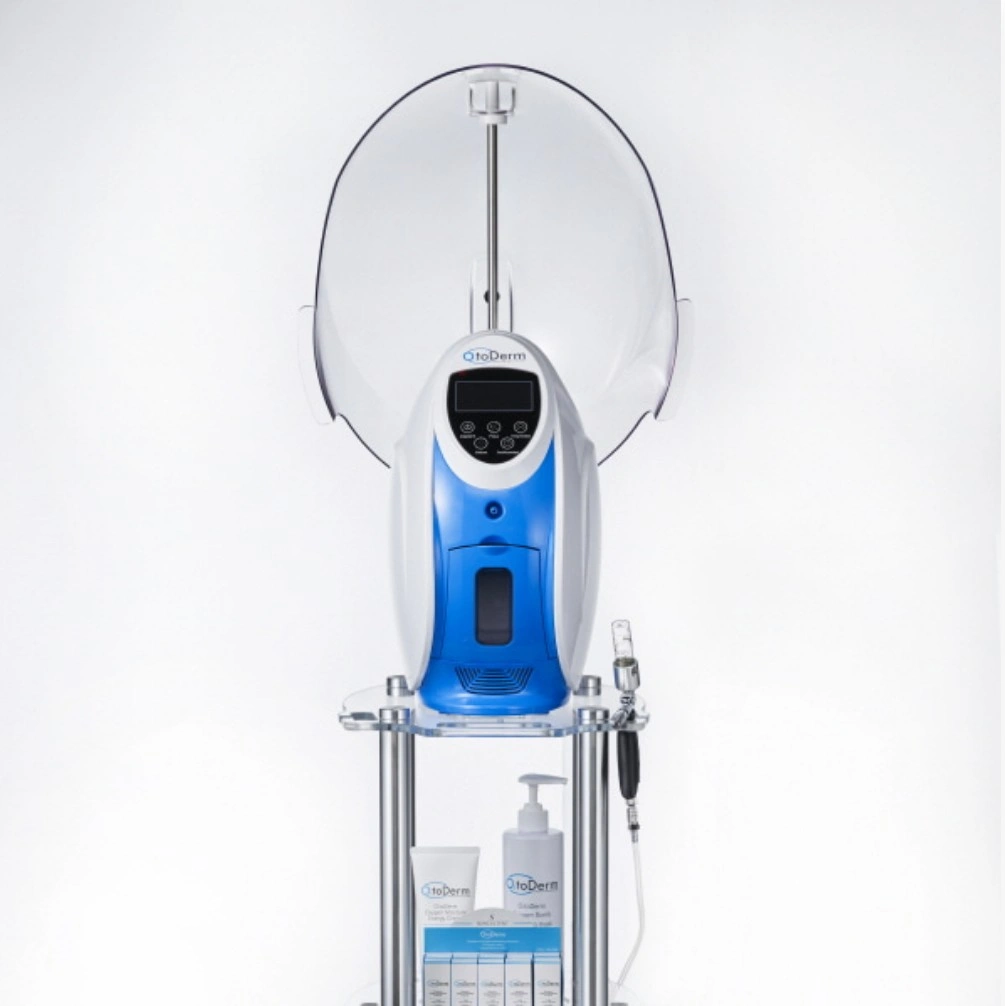
How it works
Whipping mask
Check surface residue and sensitivity during cleansing.
Oxygen scaling
Adjust contact to the skin’s roughness and tolerance.
Ten-minute dome
Check comfort in the dome environment throughout the step.
Moisture finish
Energy cream and a mask address dryness after cleansing.
the qd standard
The same treatment, never the same plan.
Rather than a fashionable name or a fixed package, we weigh the structure found at examination, safety, recovery and the limits within one plan.
- DIAGNOSIS FIRST
Cause before name
We first separate out the tissue and the function behind your concern.
- LESS, PRECISE
Only as much as needed
Rather than an excessive change, we plan the smallest scope with a clear role.
- HONEST LIMIT
The limits, explained too
We explain the change you can expect, the alternatives, individual differences and the risks.
personal plan
From consultation to follow-up, planned as one flow.


Adapt cleansing
Dry cheeks and an oily T-zone do not require identical contact.
Check dome comfort
Discuss discomfort with enclosed spaces before starting.
Review the finish
Take previous cosmetic reactions into account when choosing products.
What the procedure is like
- Check recent peels, retinoids and cosmetic allergies.
- Use the whipping mask and oxygen scaling, then the dome for 10 minutes.
- Finish with energy cream and a mask, and discuss gentle cleansing at home.
Ten minutes refers to the dome alone; the cleansing and finishing steps require additional time.
Please read this before treatment
- Avoid adding a scrub or exfoliating acids if the skin feels sensitive that day.
- Report persistent itching or redness and review the products applied.
Safety & considerations
Possible reactions
- Temporary stinging or dryness during cleansing
- Redness or itching from topical ingredients
Review before care
- Allergy to fragrance, masks or moisturisers
- Recent resurfacing, open facial wounds or dermatitis
Tell staff immediately if the dome feels restrictive or breathing becomes uncomfortable.
what to expect
What to expect over time
A general guide to how the days and months after treatment usually unfold. Results vary by individual.
After cleansing
Check both freshness and any tightness.
After the dome
Assess comfort without treating tingling as a desired response.
Between visits
Review hydration and cleansing habits before choosing an interval.
Sessions & results
Changes in surface comfort and moisture vary. One- and five-session options describe visits, not a cure for skin disease or continuous oxygen delivery.
how it compares
How it compares
Oxygen care covers cleansing through moisturising; cryo adds a short cooling stage to another visit.
| O2toDerm Oxygen Care | Cryo Soothing Add-on | |
|---|---|---|
| Scope and purpose | Whipping mask, scaling, 10-minute dome, cream and mask | Three-minute device-cooling add-on |
before consultation
Before you decide, the questions people always ask
No. Whipping mask and oxygen scaling come before the dome; energy cream and a mask follow it. Allow additional time for these steps.
No. This is a facial cleansing and moisturising program, not a medical treatment delivering oxygen to the body in a pressurised chamber. The dome only surrounds the face, and its purpose also differs from respiratory treatment intended to raise blood oxygen levels.
Stinging is not a measure of benefit. Tell staff about burning or itching so the product can be removed or the step adjusted. Please also mention any past allergy to fragrance or mask ingredients, or recent resurfacing, before the session begins.
Scaling and lesion-by-lesion extraction are different processes. Oxygen scaling adjusts contact to surface roughness and tolerance; it does not remove the contents of blocked comedones. If extraction is needed, confirm the lesions involved and its scope separately before treatment.
Mention sensitivity to enclosed spaces beforehand. If discomfort develops, the step can be stopped and suitable alternatives discussed. Do not try to endure a feeling of restriction or difficulty breathing; tell staff at that moment.
Related treatments
 Skincare
Aqua Peel Basic
qd aqua peel basicWhether the goal is clearing debris and dead skin from pore openings, and whether your skin stays calm rather than heating up afterwards Skincare
Aqua Peel Premium
qd aqua peel premiumWhether skin that heats up after exfoliation needs cooling with cryo, and whether you are sensitive to cold Skincare
Black Peel
qd black peelWhether your acne is at the comedone stage or the red, inflamed stage, and whether extraction is also needed Skincare
Pink Peel
qd pink peelWhether you want smoother texture or firmness care, and whether acids sting your skin a lot Skincare
YES Peel
qd yes peelWhether sensitivity comes from inflammation or a weakened barrier, and any upcoming events or other treatment plans Skincare
LaLa Peel
qd lala peelWhether your skin is oily yet stings easily, and whether irritation from peeling needs to be kept down

personal consultation
Tell us what bothers you now, the change you want, what you have had done before and any dates that matter. We will compare the possible approaches and their limits, calmly.
Consult now