Juvelook Volume
qd juvelook volume
Juvelook Volume uses PDLLA and HA in consultations for hollowness and volume changes. Compare it with texture-focused Juvelook Skin and conventional HA fillers. QD Clinic in Gangnam, Seoul explains amounts by area, gradual assessment, nodules and overcorrection risks.
Juvelook Volume is available at QD Clinic in Gangnam, Seoul, Korea.

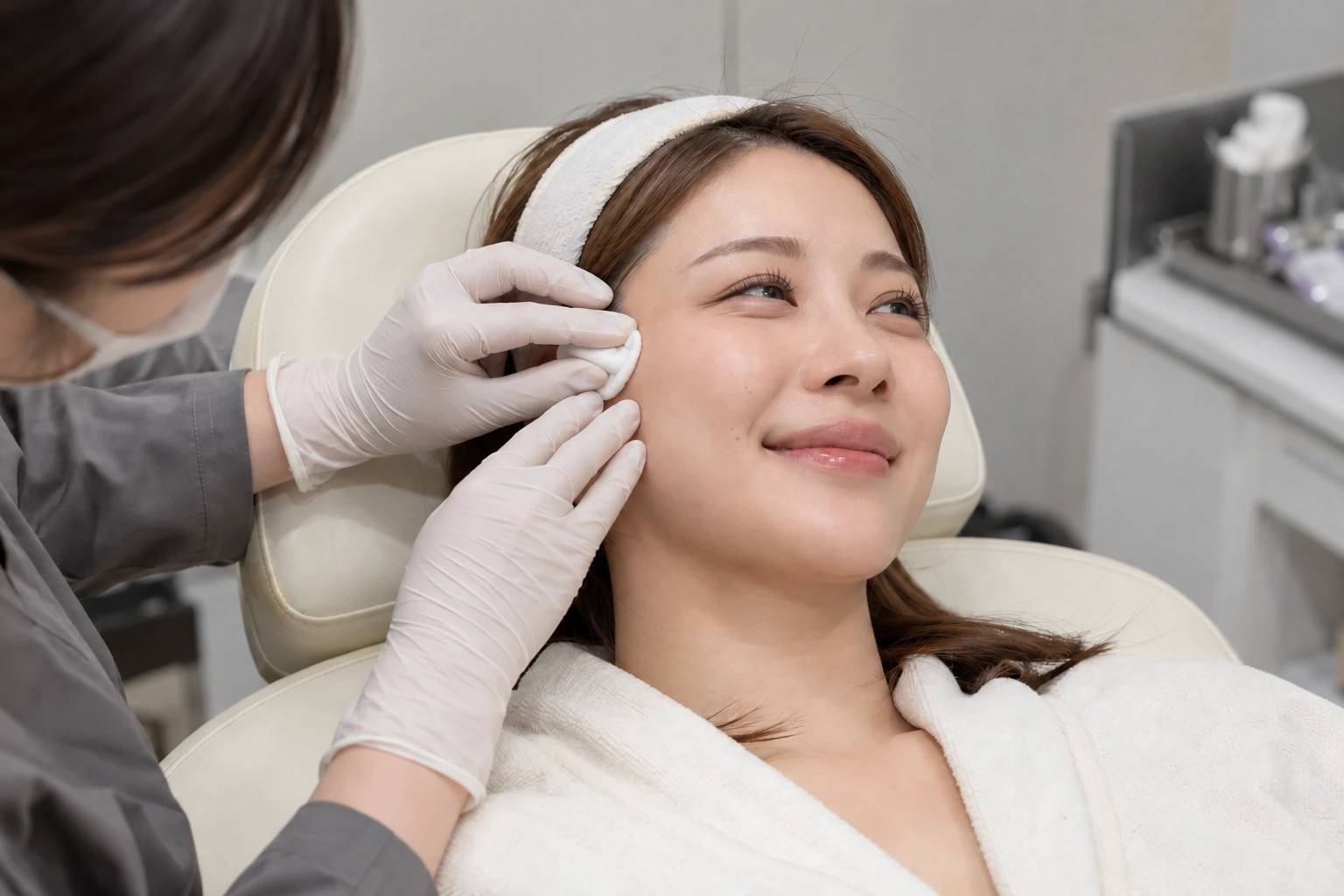
Juvelook Volume at a glance
A guide to Juvelook Volume for hollowness and skin firmness. Discuss goals by area, previous injections and whether further treatment is needed after reviewing progress.
- Treatment time
- Time: A session takes about 20–40 minutes, including numbing time.
- Sessions and progress
- A typical plan is about 2–3 sessions spaced roughly 4 weeks apart, with structural changes developing gradually over the following months as collagen support builds. Maintenance is considered after a period decided at consultation. (Results vary by individual.)
- Recovery
- Little downtime; small bumps or firmness at the injection sites may appear and usually settle within about 1–2 days. Temporary redness, mild swelling, tenderness or minor bruising may occur. Avoid makeup, saunas and intense exercise briefly, use sun protection, and follow the guidance we provide.
Timing, progress and recovery depend on your condition and treatment area. See the guidance below for details and precautions.
is this for me
Who it’s for
Even if none of these describes you, we will look again at the consultation.
- Cheeks or temples that have lost some fullness
- Softened nasolabial folds where subtle support helps
- Those who want structure and skin quality together, developing gradually
- People who prefer a collagen-stimulating approach over a traditional filler
Whether Volume or another approach suits the area is confirmed during consultation.
start with your concern
Before you pick a treatment name, start with the cause of your concern.
Even a treatment with the same name takes on a different role and scope depending on your current structure, the change you want, what you have had before and the recovery time you have.
Where you are now, and where we start
Areas where hollowing and skin elasticity have to be considered together
The change you want, the impression you keep
Whether Volume or another approach suits the area is confirmed during consultation.
How it differs from similar options
These all add support or volume to the face, but they differ in how — from gradual collagen to immediate filling — so the right one depends on your goal.
Health information and recovery schedule
Little downtime; small bumps or firmness at the injection sites may appear and usually settle within about 1–2 days. Temporary redness, mild swelling, tenderness or minor bruising may occur. Avoid makeup, saunas and intense exercise briefly, use sun protection, and follow the guidance we provide.
the principle
How it works
Before the product name we match the actual ingredients, the injection layer and your skin concern, then decide the dose, the interval and anything done alongside it.
Juvelook Volume uses larger PDLLA microparticles than Juvelook Skin, placed in the deep dermis or subdermal layer. The hyaluronic acid gives an immediate softening effect, while the larger PDLLA particles are thought to prompt firmer collagen support over the following months, giving subtle structure and a mild lifting effect. Because it works gradually through collagen rather than only filling space, it differs from traditional hyaluronic-acid fillers; the two can be discussed together at consultation.
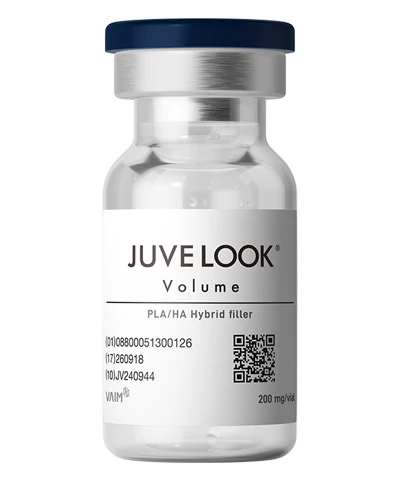
How it works
Larger PDLLA particles, placed deeper
Juvelook Volume uses larger PDLLA microparticles than Juvelook Skin, placed in the deep dermis or subdermal layer.
Softening now, structure over time
The hyaluronic acid gives an immediate softening effect, while the larger PDLLA particles are thought to prompt firmer collagen support over the following months.
Structure through collagen, not only filling
Because it builds subtle structure through gradual collagen rather than only filling space, it differs from a traditional hyaluronic-acid filler.
Why change is gradual
The lifting effect is subtle and develops over the months after treatment as collagen support builds, rather than at once. (Results vary by individual.)
the qd standard
The same treatment, never the same plan.
Rather than a fashionable name or a fixed package, we weigh the structure found at examination, safety, recovery and the limits within one plan.
- DIAGNOSIS FIRST
Cause before name
We first separate out the tissue and the function behind your concern.
- LESS, PRECISE
Only as much as needed
Rather than an excessive change, we plan the smallest scope with a clear role.
- HONEST LIMIT
The limits, explained too
We explain the change you can expect, the alternatives, individual differences and the risks.
personal plan
From consultation to follow-up, planned as one flow.
Juvelook Volume uses PDLLA and HA in consultations for hollowness and volume changes. Compare it with texture-focused Juvelook Skin and conventional HA fillers. QD Clinic in Gangnam, Seoul explains amounts by area, gradual assessment, nodules and overcorrection risks.


Ingredients and authenticity
Consultation and assessment of the area
Anatomy and expression
Cleansing and numbing cream
Small amounts, one stage at a time
A typical plan is about 2–3 sessions spaced roughly 4 weeks apart, with structural changes developing gradually over the following months as collagen support builds. Maintenance is considered after a period decided at consultation. (Results vary by individual.)
What the procedure is like
- Consultation and assessment of the area
- Cleansing and numbing cream
- Injections in the deep dermis or subdermal layer
- Cooling, soothing and aftercare guidance
Time: A session takes about 20–40 minutes, including numbing time.
Please read this before treatment
- Little downtime; small bumps or firmness at the injection sites may appear and usually settle within about 1–2 days.
- Temporary redness, mild swelling, tenderness or minor bruising may occur.
- Avoid makeup, saunas and intense exercise briefly, use sun protection, and follow the guidance we provide.
Safety & considerations
Possible reactions
- Small bumps or a firm feeling at the injection sites, usually settling within about 1–2 days
- Temporary redness, mild swelling or a flushed feeling
- Tenderness in the treated area for a short time
- Occasionally minor bruising at injection points
When to take extra care
- Pregnancy or breastfeeding — let us know at consultation
- Active skin infection, inflammation or open lesions in the treatment area
- Known allergy or hypersensitivity to any component of the product
- A history of keloid, granuloma formation or difficulty with wound healing
- Recent fillers, injectables or energy treatments in the area — tell your doctor so timing can be planned
Whether Juvelook Volume suits the area is confirmed during consultation, and any volume effect is subtle and gradual. Effects vary by individual, and side effects may occur.
what to expect
What to expect over time
A general guide to how the days and months after treatment usually unfold. Results vary by individual.
DAY 0
Treatment day
Numbing first, then injections in the deep dermis or subdermal layer. Small bumps or a firm feeling at the injection sites may appear, with mild redness or swelling.
DAY 1-2
Settling
The small bumps or firmness usually settle within about 1–2 days. Minor bruising, if any, starts to fade.
WEEK 2-4
Between sessions
Sessions are usually spaced about 4 weeks apart. Any early softening effect varies between people.
OVER THE FOLLOWING MONTHS
Structure builds
As collagen support builds, subtle structure and a mild lifting effect may develop gradually. (Results vary by individual.)
AFTER THE COURSE
Review & maintenance
Your doctor reviews the outcome and discusses maintenance timing based on your skin.
Sessions & results
A typical plan is about 2–3 sessions spaced roughly 4 weeks apart, with structural changes developing gradually over the following months as collagen support builds. Maintenance is considered after a period decided at consultation. (Results vary by individual.)
how it compares
How it compares
These all add support or volume to the face, but they differ in how — from gradual collagen to immediate filling — so the right one depends on your goal.
| Juvelook Volume | Juvelook Skin | Hyaluronic-acid filler | |
|---|---|---|---|
| Main agent | Larger PDLLA microparticles + HA | Fine PDLLA microparticles + HA | Hyaluronic-acid filler |
| How it works | Builds subtle structure through collagen | Refines texture and glow near the surface | Adds volume by filling space directly |
| Often chosen for | Softened cheeks, temples, folds | Texture, pores and radiance | Defined volume or contour |
| Sessions | Usually 2–3 | Usually 2–3 | Often a single placement, refined as needed |
| Downtime | Little; small bumps possible | Little; small papules possible | Little; swelling or bruising possible |
Neither is “better” — they work differently and suit different goals. The right choice is decided after we assess your skin.
before consultation
Before you decide, the questions people always ask
Straight after the treatment the area does look somewhat fuller because of the hyaluronic acid, but that is not the final result. The real volume builds over two to three months as PDLLA stimulates collagen production. Trying to reach the full result in a single session makes overcorrection likely, so we plan it in stages.
Nodules are reported relatively more often with large-particle formulations. That is why we stay conservative about injection depth and about how much we place in one session, and why we avoid the areas where the material clumps easily. If a lump you can feel does remain, it is easier to manage when it is picked up early, so please contact us straight away.
Mainly the hollowed areas that cast a shadow, such as the cheeks and the temples. Where the skin is very thin and moves a great deal, such as the lips or under the eyes, a different option may suit you better. Risks and realistic expectations differ from area to area, so at the consultation we decide together where to place it and how much.
Unlike hyaluronic acid fillers, it cannot be reversed with a dissolving agent. PDLLA is absorbed gradually over time, but that means there is no way to remove it immediately. So we keep to the same order every time: we start with a small amount, watch how it settles, and then decide whether to add more.
Both belong to the collagen-stimulating family, but the ingredient and the formulation are different. Which one suits you depends on where the hollow sits and how deep it is, on the thickness of your skin, and on how quickly you would like the change to appear. At the consultation we go through the differences between the two and the course you can expect.
Areas needing volume may differ from those needing texture treatment. The location of hollowness, skin thickness and previous injections guide the product and treatment extent. Discuss the initial amount separately from any additional treatment considered after follow-up.
A vial is a packaging unit; cc measures the volume of prepared liquid. Check the product specification, amount by vial and prepared injection volume together. One vial does not define a fixed treatment area or outcome; examination determines the appropriate extent.
Look at the examination and the plan rather than the treatment name. First, what the clinic checks before deciding — at QD Clinic in Gangnam, Seoul, the first thing we look at for this treatment is “Areas where hollowing and skin elasticity have to be considered together”. Second, whether it explains why it recommends that scope and method, compared with the alternatives. Third, whether it reviews your progress with you when results are expected. Our doctor goes through these three points at consultation before the treatment is decided.
At QD Clinic in Gangnam, Seoul, South Korea. We are at 3F, 502 Gangnam-daero, Gangnam-gu, Seoul (Nonhyeon-dong, Seohee Building), a 4-minute walk from Exit 3 of Nonhyeon or Sinnonhyeon Station. Call +82-2-514-1650 or use the consultation form on this site to book a doctor’s consultation first.
Related treatments


personal consultation
Tell us what bothers you now, the change you want, what you have had done before and any dates that matter. We will compare the possible approaches and their limits, calmly.
Consult now