Front Cheek Filler
qd front cheek filler
Front cheek filler uses hyaluronic acid (HA) to add volume to the anterior cheek — the front-facing surface over the cheekbone that reads first when someone looks at you. As this area loses fat and support with age, the mid-face can look flat, tired or gaunt. Placed deep against the bone in small amounts, HA restores gentle forward projection and can soften the top of the smile line. At QD Clinic in Gangnam, Seoul, we assess your facial balance first, then decide the product, depth and amount. A session usually takes about 15–30 minutes with little downtime. (Results vary by individual.)
Front Cheek Filler is available at QD Clinic in Gangnam, Seoul, Korea.

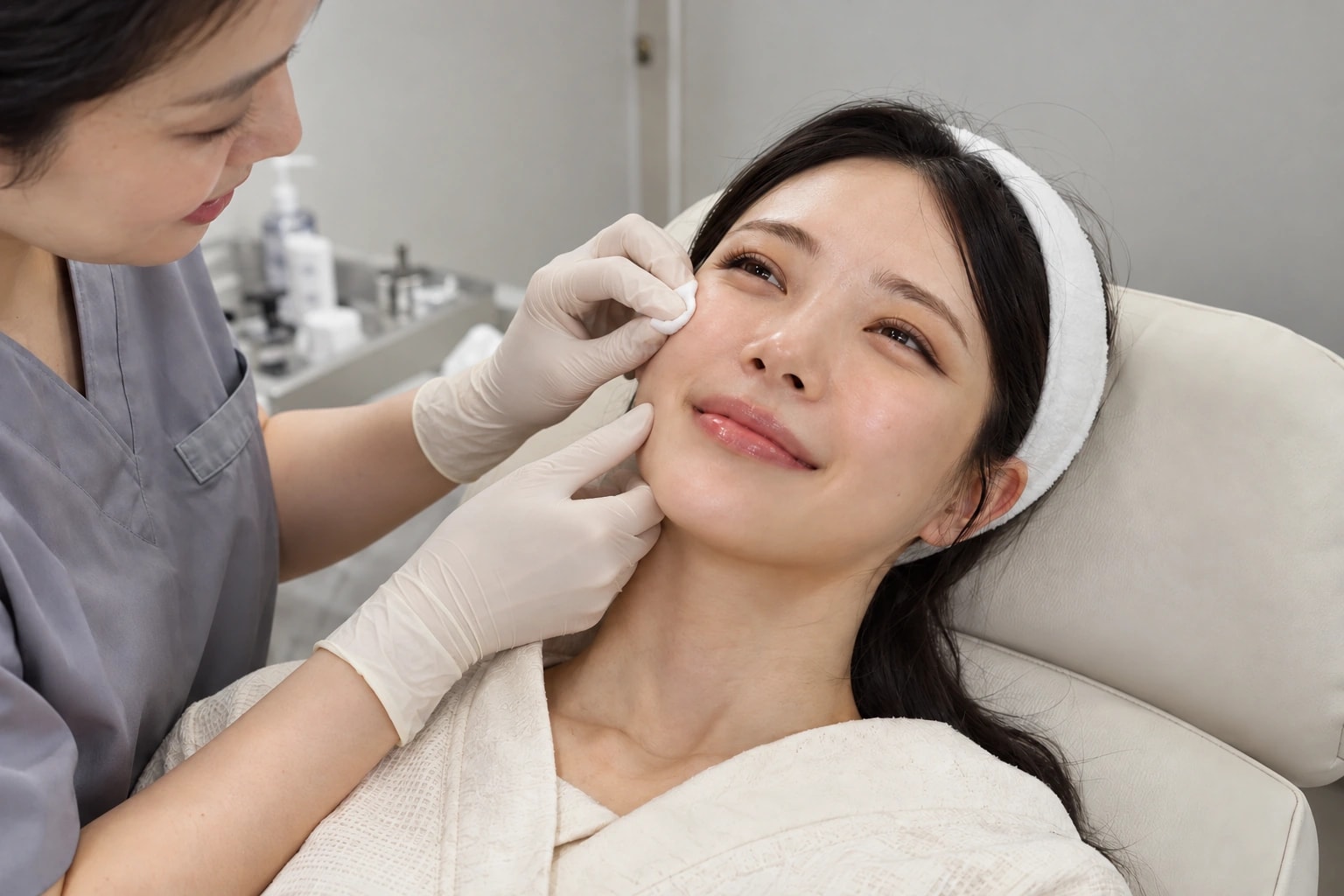
is this for me
Who it’s for
Even if none of these describes you, we will look again at the consultation.
- A flat or hollow front cheek that makes the face look tired
- Loss of mid-face volume with age
- The upper smile line starting to deepen as cheek support drops
- Anyone wanting subtle forward volume rather than a wide, high cheekbone
Cheek volume interacts with the eyes, smile line and jaw, so we plan the front cheek as part of the whole face. Suitability and the right amount are confirmed during consultation.
start with your concern
Before you pick a treatment name, start with the cause of your concern.
Even a treatment with the same name takes on a different role and scope depending on your current structure, the change you want, what you have had before and the recovery time you have.
Where you are now, and where we start
Support in the front cheek and depth through the midface
The change you want, the impression you keep
Cheek volume interacts with the eyes, smile line and jaw, so we plan the front cheek as part of the whole face. Suitability and the right amount are confirmed during consultation.
How it differs from similar options
These all add or build mid-face volume, but they work in different ways and suit different goals. The right choice is decided after we assess your face.
Health information and recovery schedule
Little downtime; most people return to daily activities the same day. Temporary swelling, redness, tenderness or bruising may occur and usually settles within about 1–2 weeks. Avoid pressing or massaging the area, and skip saunas and intense exercise for a day or two as we advise.
the principle
How it works
Rather than a still photograph, we look first at expression, overall proportion and vascular anatomy, then set the product, the injection layer and the amount conservatively.
Hyaluronic acid is a sugar molecule that occurs naturally in the skin and holds water, so an HA filler adds soft volume where it is placed and is gradually broken down by the body over time. For the front cheek, the doctor usually places the gel deep, against the anterior surface of the cheekbone, where a small, well-positioned amount projects the face forward without widening it. Because the mid-face supports the tissue below it, adding volume here can also lend a little lift to the upper smile line. HA can be dissolved with an enzyme called hyaluronidase if an adjustment is ever needed. The product, plane and amount are matched to your anatomy. (Results vary by individual.)
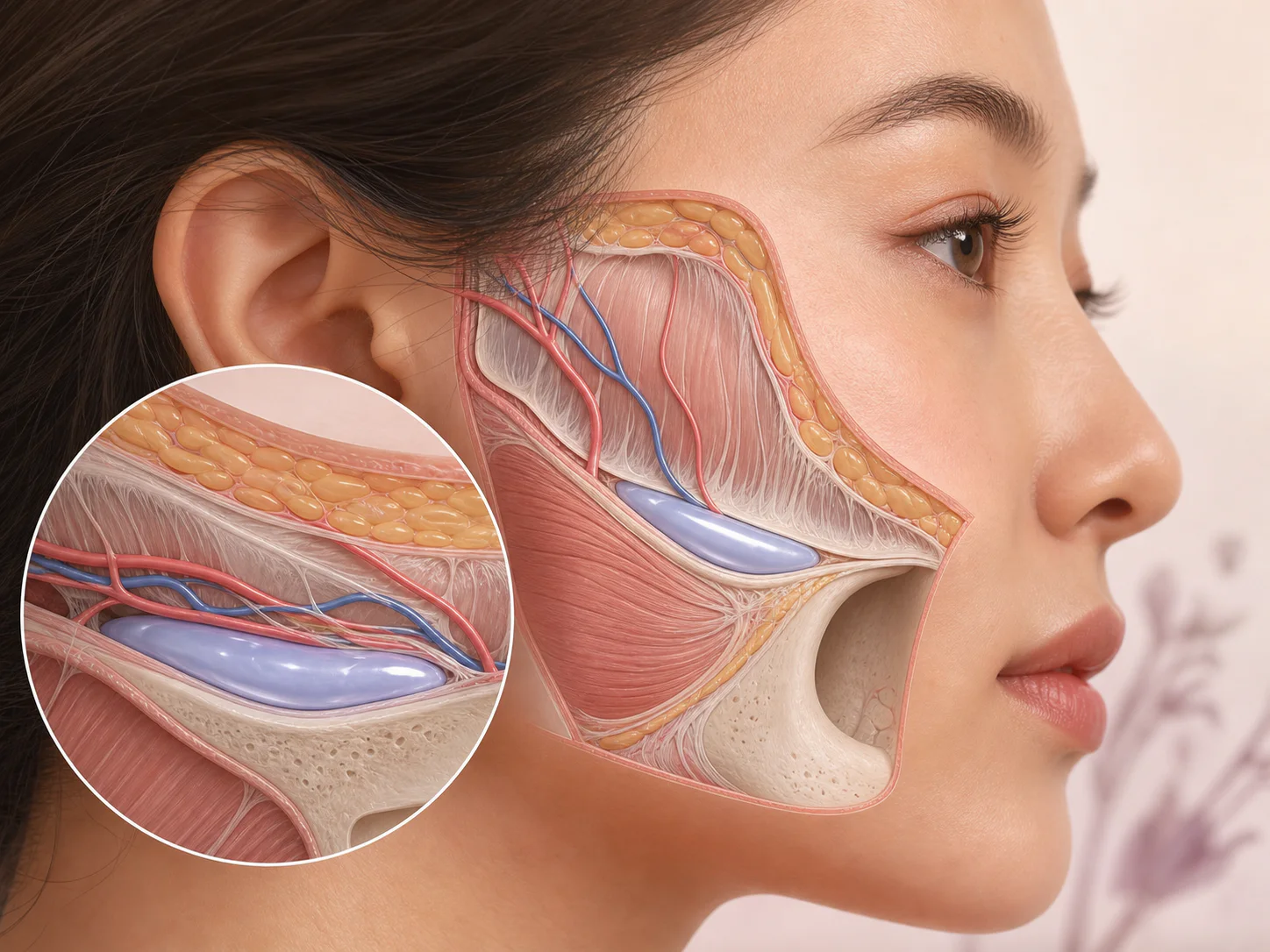
How it works
Water-holding volume
Hyaluronic acid occurs naturally in the skin and binds water, so the gel adds soft volume exactly where it is placed against the cheekbone.
Placed deep, by needle or cannula
For the front cheek the gel sits deep against the bone, delivered with a fine needle or a blunt cannula, so a small, well-positioned amount projects the face forward without widening it.
Immediate but temporary
Volume shows the same day because the gel physically fills the space; over the following months the body gradually breaks the HA down, so the effect is not permanent.
Adjustable and reversible
Because it is HA, the result can be added to gradually, or dissolved with an enzyme (hyaluronidase) if an adjustment is ever needed.
the qd standard
The same treatment, never the same plan.
Rather than a fashionable name or a fixed package, we weigh the structure found at examination, safety, recovery and the limits within one plan.
- DIAGNOSIS FIRST
Cause before name
We first separate out the tissue and the function behind your concern.
- LESS, PRECISE
Only as much as needed
Rather than an excessive change, we plan the smallest scope with a clear role.
- HONEST LIMIT
The limits, explained too
We explain the change you can expect, the alternatives, individual differences and the risks.
personal plan
From consultation to follow-up, planned as one flow.
Front cheek filler uses hyaluronic acid (HA) to add volume to the anterior cheek — the front-facing surface over the cheekbone that reads first when someone looks at you. As this area loses fat and support with age, the mid-face can look flat, tired or gaunt. Placed deep against the bone in small amounts, HA restores gentle forward projection and can soften the top of the smile line. At QD Clinic in Gangnam, Seoul, we assess your facial balance first, then decide the product, depth and amount. A session usually takes about 15–30 minutes with little downtime. (Results vary by individual.)


Ingredients and authenticity
Consultation and assessment of facial balance
Anatomy and expression
Cleansing, marking and topical numbing for comfort
Small amounts, one stage at a time
Volume appears right away and settles over about 1–2 weeks as any swelling resolves. HA in a deep, low-movement area like the cheek often lasts around 12–18 months, though this varies with the product and your metabolism. A top-up can be considered at consultation. (Results vary by individual.)
What the procedure is like
- Consultation and assessment of facial balance
- Cleansing, marking and topical numbing for comfort
- HA placed deep by fine needle or blunt cannula, then shaped by hand
- Review of symmetry and aftercare guidance
Time: A session usually takes about 15–30 minutes.
Please read this before treatment
- Little downtime; most people return to daily activities the same day.
- Temporary swelling, redness, tenderness or bruising may occur and usually settles within about 1–2 weeks.
- Avoid pressing or massaging the area, and skip saunas and intense exercise for a day or two as we advise.
Safety & considerations
Possible reactions
- Temporary swelling, redness or a feeling of fullness
- Tenderness or bruising at the injection points
- Small lumps or slight unevenness, which usually settle or can be smoothed
- Very rarely, filler affecting a blood vessel — this needs prompt medical attention
When to take extra care
- Pregnancy or breastfeeding — let us know at consultation
- Active skin infection, inflammation or a breakout in the treatment area
- A known allergy to hyaluronic acid or lidocaine
- Previous filler, threads or surgery in the area — tell your doctor so placement can be planned
- A bleeding tendency or blood-thinning medication — tell your doctor
Whether cheek filler suits you, and the right amount, are confirmed during consultation. Effects and their duration vary by individual, and side effects may occur. We explain the warning signs — unusual pain, skin turning pale or dusky, or any vision change — so you know to contact us promptly.
what to expect
What to expect over time
A general guide to how the days and months after treatment usually unfold. Results vary by individual.
DAY 0
Treatment day
Forward volume is visible immediately. Mild swelling, redness or tenderness is common, and the cheek can look fuller than the final result at first.
DAY 1-3
Early settling
Most swelling eases and any bruising begins to fade. Makeup and normal skincare can usually resume as advised.
WEEK 1-2
Settled result
Swelling resolves and the true contour of the cheek becomes clear. (Results vary by individual.)
12-18 MONTHS
Duration
HA in this deep, low-movement area often lasts around 12–18 months, varying with the product and your metabolism. (Results vary by individual.)
TOP-UP
Review & maintenance
Your doctor reviews the result and, if appropriate, discusses timing for a top-up based on your face.
Sessions & results
Volume appears right away and settles over about 1–2 weeks as any swelling resolves. HA in a deep, low-movement area like the cheek often lasts around 12–18 months, though this varies with the product and your metabolism. A top-up can be considered at consultation. (Results vary by individual.)
how it compares
How it compares
These all add or build mid-face volume, but they work in different ways and suit different goals. The right choice is decided after we assess your face.
| Front Cheek Filler | Collagen-stimulating filler | Fat Grafting | |
|---|---|---|---|
| Agent | Hyaluronic acid (HA) gel | Calcium hydroxylapatite or poly-L-lactic acid | Your own fat, transferred surgically |
| What it does | Adds soft volume against the cheekbone straight away | Prompts your own collagen to build volume gradually | Adds volume with transferred fat; part of it may persist |
| Onset | Immediate; settles over about 1–2 weeks | Gradual over weeks to months | Some volume at once; final after healing |
| Duration | Around 12–18 months (varies) | Often longer, up to about 2 years (varies) | Variable; a portion can be long-lasting |
| Reversible? | Yes — dissolvable with hyaluronidase | No specific dissolver | Not readily reversible |
| Downtime | Little; temporary swelling or bruising | Little; similar injection reactions | More; a minor surgical procedure |
Neither is “better” — they work differently and suit different goals. The right choice is decided after we assess your skin.
before consultation
Before you decide, the questions people always ask
The front cheek is the part of the face that catches the most light, so when it loses volume a shadow settles there and the nasolabial folds and the hollows under the eyes become more noticeable at the same time. It does not read as weight loss; it reads as the whole face having slipped downward. That is why treating the front cheek often makes the surrounding lines look less pronounced as well.
Rather than placing the full amount you want in one sitting, we deliberately start with less and judge only once the swelling has settled. The front cheek is an area where even slightly too much can look bunched and unnatural when you smile. Reviewing the result after about two weeks and topping up only if it is needed is the safer approach.
We decide the injection points after watching how the area actually moves when you make an expression. Injecting on the basis of a face at rest alone is what leaves the filler bunching or riding upward when you smile, which looks unnatural. So during the consultation we ask you to smile for us, and we choose the layer and the amount to suit that movement.
If a large amount of volume is needed over a wide area, fat grafting may suit you better. Filler can be placed precisely where you want it and can be reversed, but how long it lasts is limited; grafted fat lasts a long time, though how well it takes varies from person to person and it requires a surgical procedure. We will compare the two options with you.
Hyaluronic acid filler can be reversed with a dissolving agent (hyaluronidase). That said, the dissolving agent itself can cause an allergic reaction, so it is not a treatment we carry out casually. Being reversible does not mean it is fine to inject a large amount, so we keep to the principle of starting with a small amount.
Look at the examination and the plan rather than the treatment name. First, what the clinic checks before deciding — at QD Clinic in Gangnam, Seoul, the first thing we look at for this treatment is “Support in the front cheek and depth through the midface”. Second, whether it explains why it recommends that scope and method, compared with the alternatives. Third, whether it reviews your progress with you when results are expected. Our doctor goes through these three points at consultation before the treatment is decided.
At QD Clinic in Gangnam, Seoul, South Korea. We are at 3F, 502 Gangnam-daero, Gangnam-gu, Seoul (Nonhyeon-dong, Seohee Building), a 4-minute walk from Exit 3 of Nonhyeon or Sinnonhyeon Station. Call +82-2-514-1650 or use the consultation form on this site to book a doctor’s consultation first.
Related treatments
 Filler
Side Cheek Filler
qd side cheek fillerHollowing in the side cheek and balance across the width of the face Filler
Temple Filler
qd temple fillerHollow temples and how they join the cheekbone and the forehead Filler
Forehead Filler
qd forehead fillerThe curve of the forehead and how it joins the brow and the bridge of the nose Filler
Nose Filler
qd nose fillerThe limited contour correction possible at the bridge and the tip Filler
Lip Filler
qd lip fillerThe proportion, the outline and the movement of the lips Filler
Chin Filler
qd chin fillerThe length and projection of the chin and the proportions of the lower face

personal consultation
Tell us what bothers you now, the change you want, what you have had done before and any dates that matter. We will compare the possible approaches and their limits, calmly.
Consult now