Erbium Lower Blepharoplasty
qd erbium lower blepharoplasty
Erbium lower blepharoplasty is surgery that assesses excess lower-eyelid skin and protruding fat together. Through an approach just below the lashes, the skin is tidied and, where needed, fat is repositioned or partly adjusted. Eyelid support and dry eye are checked to plan the extent of removal.
Erbium Lower Blepharoplasty is available at QD Clinic in Gangnam, Seoul, Korea.

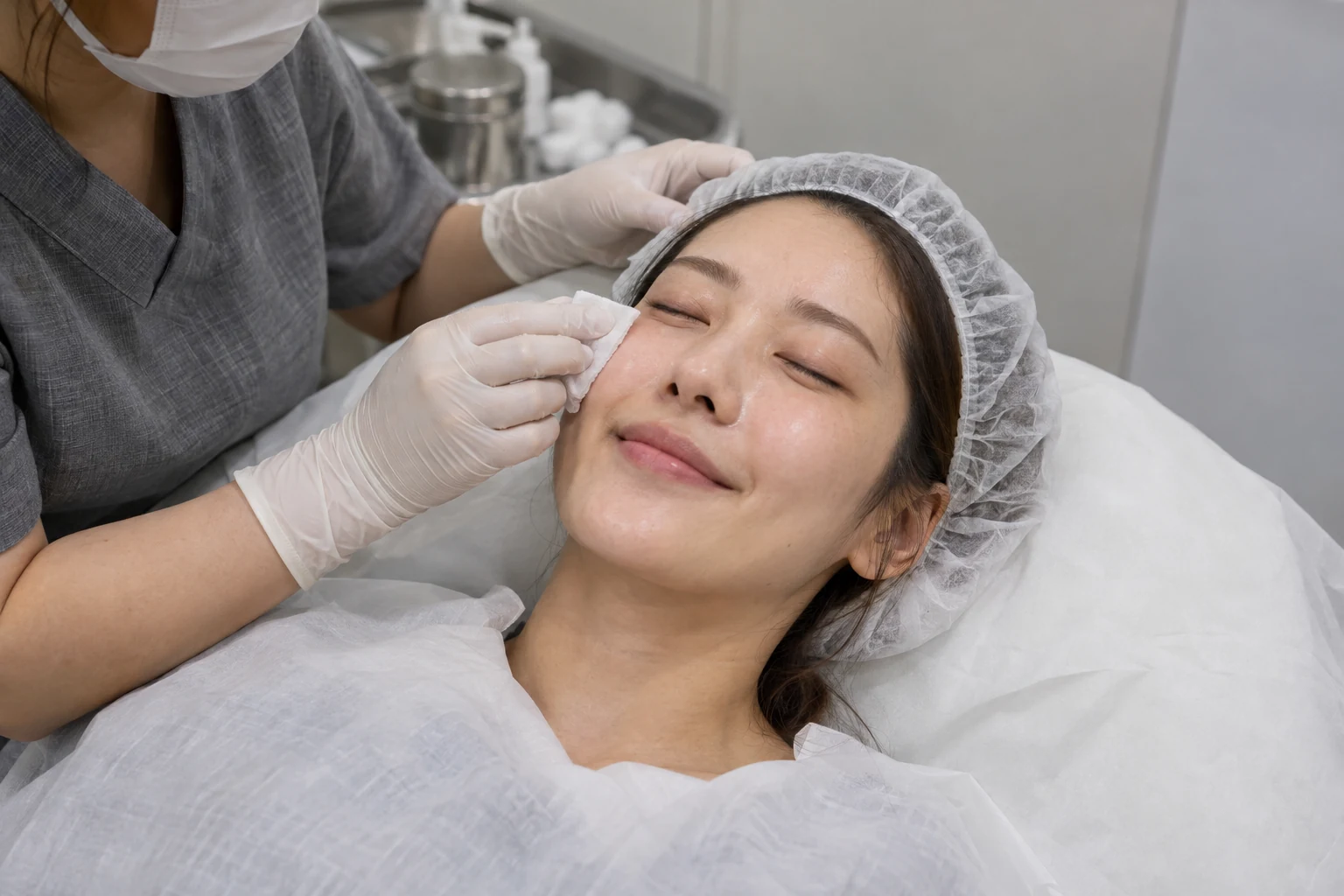
is this for me
Who it’s for
Even if none of these describes you, we will look again at the consultation.
- Under-eye bags accompanied by loose or wrinkled lower-lid skin
- A tired look from sagging that persists even when rested
- Cases where fat repositioning alone would not address the excess skin
If skin is firm with little excess, transconjunctival fat repositioning may suit better; the right approach is decided at consultation.
start with your concern
Before you pick a treatment name, start with the cause of your concern.
Even a treatment with the same name takes on a different role and scope depending on your current structure, the change you want, what you have had before and the recovery time you have.
Where you are now, and where we start
Combined aging of the under-eye skin, muscle and fat, and lower lid support
the principle
How it works
Alongside shape, we examine how the eye opens and closes, the ocular surface, the fat, skin and adhesions, then set the incision and the extent of correction.
Even with an Erbium laser, this is surgery that reaches the tissue and involves an incision and recovery. Bleeding, scarring and recovery time depend more on the eyelid condition and the extent of surgery than on the device, and are explained at your examination. The specific approach and anesthesia are confirmed with your surgeon.
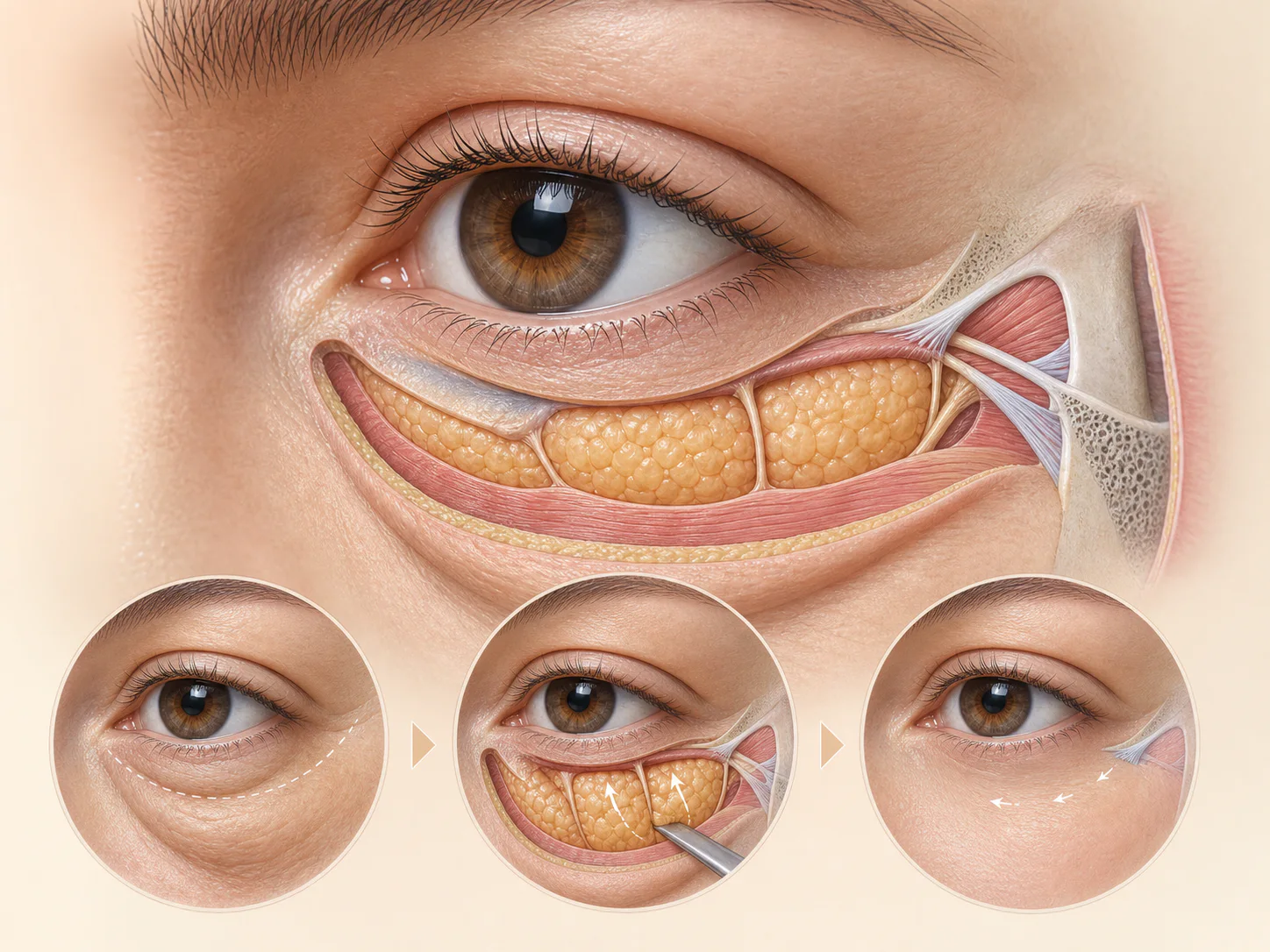
How it works
A skin approach, just under the lashes
The incision is placed just below the lash line (subciliary), giving access to both the loose skin and the orbital fat — something an inner-lid (transconjunctival) route cannot trim.
Fat repositioned, not simply removed
Bulging orbital fat is repositioned over the bony rim to fill the tear-trough hollow, or a small amount is conservatively reduced, rather than removed aggressively, which helps avoid a hollowed look.
Skin redraped, then fine sutures
The excess skin is trimmed and redraped and closed with fine sutures, under local anesthesia, sometimes with light sedation.
the qd standard
The same treatment, never the same plan.
Rather than a fashionable name or a fixed package, we weigh the structure found at examination, safety, recovery and the limits within one plan.
- DIAGNOSIS FIRST
Cause before name
We first separate out the tissue and the function behind your concern.
- LESS, PRECISE
Only as much as needed
Rather than an excessive change, we plan the smallest scope with a clear role.
- HONEST LIMIT
The limits, explained too
We explain the change you can expect, the alternatives, individual differences and the risks.
personal plan
From consultation to follow-up, planned as one flow.
Erbium lower blepharoplasty is surgery that assesses excess lower-eyelid skin and protruding fat together. Through an approach just below the lashes, the skin is tidied and, where needed, fat is repositioned or partly adjusted. Eyelid support and dry eye are checked to plan the extent of removal.


Anatomy and function exam
Consultation, eye assessment and design
Comparing scope and method
These options address the under-eye differently, so the right one depends on how much loose skin and fat you have. This is not a ranking.
Surgery and recovery plan
This is usually a single procedure. Swelling settles over weeks and the lower-lid contour refines over about 1–3 months. (Results vary by individual.)
What the procedure is like
- Consultation, eye assessment and design
- Local anesthesia (with optional light sedation)
- Subciliary incision just below the lash line with the erbium laser
- Repositioning or conservative reduction of orbital fat, then redraping and trimming of excess skin
- Fine suture closure, recovery and aftercare guidance
Time: The procedure takes about 40–60 minutes.
Please read this before treatment
- Performed under local anesthesia, sometimes with light sedation; you can usually go home the same day.
- Because this is a skin approach, fine sutures are placed under the lash line and are typically removed at about 5–7 days.
- Swelling and bruising may occur and settle over several days to about two weeks; cold compresses and keeping the head elevated help.
- Side effects such as swelling, bruising, asymmetry, a dry-eye sensation or, uncommonly, changes in lid position may occur and are explained at consultation.
Safety & considerations
Possible reactions
- Swelling and bruising around the lower lids (mostly settle over 1–2 weeks)
- Tenderness, tightness, or a dry, gritty eye sensation for a time
- Asymmetry between the two sides
- Uncommonly, changes in lower-lid position (such as scleral show or ectropion) that may need review
- Scarring; the incision is placed under the lash line to be discreet
When to take extra care
- Bleeding disorders or blood-thinning medication — tell your doctor
- A history of significant dry eye or thyroid eye disease
- A tendency to keloid or difficulty with wound healing
- Smoking, which can affect healing
- Unrealistic expectations, or a revision after previous eyelid surgery
Risks include bleeding, infection, scarring, asymmetry, difficulty closing the eyes, lower-lid position changes and revision surgery. Sudden visual change, severe eye pain or rapidly increasing swelling require urgent care.
what to expect
What to expect over time
A general guide to how the days and months after treatment usually unfold. Results vary by individual.
DAY 0
Surgery day
Performed under local anesthesia, sometimes with light sedation; you usually go home the same day with tapes and mild tightness around the lower lids.
DAY 1-3
Swelling & bruising
Swelling and possible bruising are usually most noticeable now; cold compresses and keeping the head elevated help.
DAY 5-7
Suture removal
The fine sutures under the lash line are typically removed at about 5–7 days, and light makeup can often resume as advised.
WEEK 1-2
Settling
Much of the visible swelling and bruising eases over one to two weeks, though subtle swelling can linger.
1-3 MONTHS
Contour refines
The lower-lid contour continues to settle and refine over roughly one to three months. (Results vary by individual.)
Sessions & results
This is usually a single procedure. Swelling settles over weeks and the lower-lid contour refines over about 1–3 months.
how it compares
How it compares
These options address the under-eye differently, so the right one depends on how much loose skin and fat you have. This is not a ranking.
| Erbium Lower Blepharoplasty | Transconjunctival fat repositioning | Under-eye filler | |
|---|---|---|---|
| Approach | Subciliary skin incision — skin and fat | Inner-lid incision — fat only, no skin removed | Injectable, non-surgical |
| Best for | Bags with loose or wrinkled lower-lid skin | Bags with firm skin and little excess | Smooths mild hollowing — fades gradually and is maintained with repeat sessions |
| Anesthesia | Local, sometimes with light sedation | Local, sometimes with light sedation | Topical or local |
| Recovery | Sutures ~5–7 days; bruising ~1–2 weeks | No external sutures; often quicker | Little downtime |
| Longevity | Long-lasting; aging continues | Long-lasting for the fat treated | Lasts several months (varies by individual) |
They work differently and suit different goals. The right choice is decided after examination.
before consultation
Before you decide, the questions people always ask
Fat repositioning focuses on moving the fat itself into a better position, while Erbium Lower Blepharoplasty also tidies up the loose skin and the muscle beneath it. When there is skin left over and it creases, moving the fat alone is not enough. Which of the two your eyes actually call for is something we sort out during the examination.
The incision is placed just below the lashes so that it is hard to see once healed. A red line may show at first, and how a scar settles varies from person to person, so a scar-free result is not promised.
It is uncommon, but changes in which the lower lid is drawn downward or turns outward have been reported. That is why we are conservative about how much skin to remove and check how well the lower lid is supported at the same time. If your eyes are dry or the lower lid is already lax, we take that into account when planning.
Some people feel dryness for a while, and it usually improves with time. If you already have dry eye, the symptoms can become stronger, so we check for it and prepare before surgery. We will show you how to use artificial tears afterwards, and if the discomfort continues we will discuss seeing an ophthalmologist together.
It depends on the surgical method and on how you are healing, and they are generally removed a few days later. We will tell you the exact timing once we have seen how your recovery is going. Until then, keep the wound from being in contact with water for long and do not rub your eyes. Saunas, strenuous exercise and alcohol are also best avoided during that period.
Look at the examination and the plan rather than the treatment name. First, what the clinic checks before deciding. For this treatment, QD Clinic in Gangnam, Seoul starts by looking at this: “Combined aging of the under-eye skin, muscle and fat, and lower lid support”. Second, whether it explains why it recommends that scope and method, compared with the alternatives. Third, whether it reviews your progress with you when results are expected. Our doctor goes through these three points at consultation before the treatment is decided.
At QD Clinic in Gangnam, Seoul, South Korea. We are at 3F, 502 Gangnam-daero, Gangnam-gu, Seoul (Nonhyeon-dong, Seohee Building), a 4-minute walk from Exit 3 of Nonhyeon or Sinnonhyeon Station. Call +82-2-514-1650 or use the consultation form on this site to book a doctor’s consultation first.
Related treatments
 Surgery
Erbium Under-Eye Fat Repositioning
qd erbium under-eye fat repositioningUnder-eye fat repositioning treats eye bags by moving the fat that bulges under the eye down into the hollow of the tear trough, smoothing the transition between the lid and cheek. At QD Clinic in Gangnam, Seoul, this is performed through the inside of the lower eyelid (transconjunctival) using an erbium laser rather than a blade, so there is no external skin incision. It is carried out under local anesthesia, with light sedation if needed. (Results vary by individual.) Surgery
Erbium + Eye Ultherapy
A combination consulted on together with Erbium under-eye fat repositioning and Eye Ultherapy. The need for surgery and for the ultrasound treatment, the treatment areas and the timing are each confirmed. Surgery
Erbium + Eye Thermage
A combination consulted on together with Erbium under-eye fat repositioning and Eye Thermage. Protruding fat and skin condition are told apart, and the radiofrequency treatment area and eye protection are planned. Surgery
Erbium + Eye Sofwave
A combination consulted on together with Erbium under-eye fat repositioning and Eye Sofwave. Under-eye structure, skin condition and healing of the surgical wound are checked to decide whether to combine them and when. Surgery
Upper Blepharoplasty
qd upper blepharoplastyUpper blepharoplasty is surgery that adjusts excess upper-eyelid skin to improve a heavy look. Brow drooping and eye-opening strength are assessed separately, and skin removal alone does not correct ptosis. The incision position and extent are set with a natural crease line in mind. Surgery
Revision Eyelid Surgery
qd Revision Eyelid SurgeryProblems left after previous surgery, such as the crease line, height, scars and eye closure, are examined by cause. Remaining tissue, adhesions and how well you have healed are reviewed to explain what can be corrected and the limits.

personal consultation
Tell us what bothers you now, the change you want, what you have had done before and any dates that matter. We will compare the possible approaches and their limits, calmly.
Consult now