Ultherapy + Thermage FLX
A softer jawline and loose-feeling skin can reflect different concerns. This combination pairs imaging-guided Ultherapy with Thermage FLX radiofrequency, assigning each device its own treatment areas rather than treating the face as one uniform target.
Ultherapy + Thermage FLX is available at QD Clinic in Gangnam, Seoul, Korea.


is this for me
Who it’s for
Even if none of these describes you, we will look again at the consultation.
- People concerned about both lower-face sagging and loose cheek skin
- Those comparing two complementary approaches before increasing a single device’s shot count
- People whose skin thickness and firmness vary across the face
Assessment may support only one device. A combination does not guarantee a better result than an appropriately selected single treatment.
start with your concern
Before you pick a treatment name, start with the cause of your concern.
Even a treatment with the same name takes on a different role and scope depending on your current structure, the change you want, what you have had before and the recovery time you have.
Where you are now, and where we start
A separate plan for facial sagging and loss of skin firmness
The change you want, the impression you keep
Review skin folding, tissue thickness and existing volume together. Distinguish displaced tissue from looseness of the overlying skin.
How it differs from similar options
Ultherapy alone emphasizes an imaging-guided tissue target; Thermage FLX alone emphasizes skin firmness. This combination is considered when both assessments identify a reason to treat.
Health information and recovery schedule
Allow for consultation, preparation and both treatment stages. A visit estimate follows confirmation of the areas and shot counts.
the principle
How it works
Focused ultrasound + Radiofrequency
The devices deliver heat differently, so settings are not transferred from one to the other. Tissue position and skin condition guide their separate coverage.
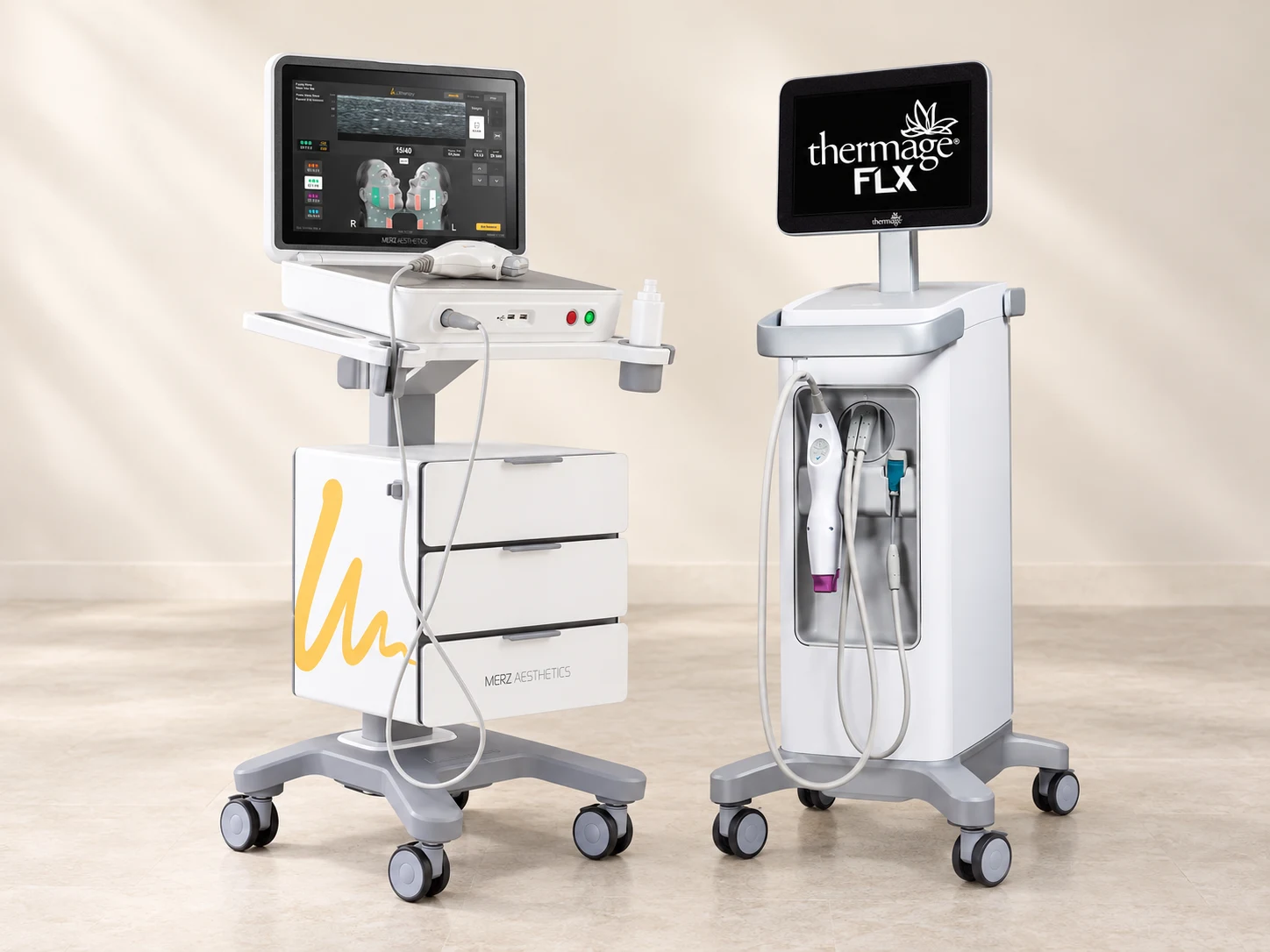
How it works
An imaging-guided target
Ultherapy uses focused ultrasound with tissue visualization to plan treatment depth and placement.
A different heating approach
Thermage FLX uses radiofrequency with cooling to address skin firmness. Its pulses are not interchangeable with ultrasound shots.
Two treatment maps
Areas of sagging and loose skin may overlap only partly. The plan considers cumulative heat exposure where both devices are used.
the qd standard
The same treatment, never the same plan.
Rather than a fashionable name or a fixed package, we weigh the structure found at examination, safety, recovery and the limits within one plan.
- DIAGNOSIS FIRST
Cause before name
We first separate out the tissue and the function behind your concern.
- LESS, PRECISE
Only as much as needed
Rather than an excessive change, we plan the smallest scope with a clear role.
- HONEST LIMIT
The limits, explained too
We explain the change you can expect, the alternatives, individual differences and the risks.
personal plan
From consultation to follow-up, planned as one flow.


Confirm the need for two devices
A single dominant concern may justify a narrower treatment plan.
Explain overlapping areas
Where the energy is delivered matters as much as the total shot count.
Document each response
Location-specific recovery notes inform the next assessment.
What the procedure is like
- Review front and side views, previous lifting treatments and filler history.
- Confirm areas and shot counts for each device, comfort measures and whether both can be performed at one visit.
- Adjust energy to tissue response and separate the sessions when clinically appropriate.
- Check treated areas for redness and tenderness before arranging follow-up.
Please read this before treatment
- Ultrasound-treated areas may feel tender while radiofrequency-treated areas feel warm; record where symptoms occur.
- Early swelling and flushing should not be mistaken for the final tightening result.
Safety & considerations
Possible reactions
- Redness, swelling, tenderness and sensory changes can occur; burns or skin surface changes are less common.
Discuss before treatment
- Thermage must not be used with a pacemaker or another electrical implant. Discuss pregnancy, breastfeeding, inflamed skin, facial implants, fillers, threads and recent treatments.
Contact the clinic for blisters, worsening pain, persistent sensory changes or altered facial movement.
what to expect
What to expect over time
A general guide to how the days and months after treatment usually unfold. Results vary by individual.
Immediately
Check the skin response in areas treated with both devices.
Early recovery
Monitor tenderness and swelling, reporting unusual or persistent altered sensation.
Later review
Compare the jawline and skin condition separately using consistent lighting and angles.
Sessions & results
Changes may develop gradually. Further treatment should address the remaining concern rather than automatically repeating both devices as a package.
how it compares
How it compares
Ultherapy alone emphasizes an imaging-guided tissue target; Thermage FLX alone emphasizes skin firmness. This combination is considered when both assessments identify a reason to treat.
| Ultherapy | Thermage FLX | |
|---|---|---|
| Energy | Focused ultrasound | Radiofrequency |
before consultation
Before you decide, the questions people always ask
No. The two devices deliver different forms of energy. The 300 + 300 option allocates 300 shots to each device; it does not split a 600-shot Ultherapy treatment.
Not necessarily. Areas selected for sagging may differ from those selected for firmness. Where they overlap, tissue condition and heat response guide the plan.
The booking does not determine suitability for a combined visit. Recent energy treatments or irritated skin can change the order, interval or decision to start with one device. Areas, shot counts and comfort measures for each device are confirmed at assessment, together with whether both can be performed at one visit. Mention previous lifting treatments and fillers so the schedule can take them into account.
The facial shot count should not be read as including a dedicated eye treatment. Eye-specific tips and protective measures require a separate assessment. This combination is planned around the cheeks, the area around the mouth and the jawline, so raise any eye-area concern before the plan is set.
They may develop at different rates. Follow-up should distinguish early swelling from changes in the jawline and skin condition, assessing each concern separately. Photographs taken with consistent lighting and angles are used to compare the two. Any further treatment is chosen for the concern that remains rather than repeating both devices automatically.
Related treatments
 Lifting
Ultherapy PRIME
qd ultherapy primeThe target depth the focused ultrasound must reach, and how far the sagging goes into the SMAS Lifting
Sofwave
qd sofwaveLoss of elasticity in the mid dermis and the area to treat Lifting
Thermage FLX
qd thermage flxLoss of elasticity in the deep dermis, the area to treat and the number of shots Lifting
ONDA Lifting
qd onda liftingThe deep-layer fat and elasticity the microwaves reach, and the area to treat Lifting
Ultherapy + ONDA
Distinguishing under-chin fullness from sagging while preserving facial volume

personal consultation
Tell us what bothers you now, the change you want, what you have had done before and any dates that matter. We will compare the possible approaches and their limits, calmly.
Consult now