Ultherapy + ONDA
A less defined jawline is not always caused by loose skin alone. Ultherapy + ONDA considers focused ultrasound alongside microwave treatment, first distinguishing unwanted fullness from facial volume that should be preserved.
Ultherapy + ONDA is available at QD Clinic in Gangnam, Seoul, Korea.

is this for me
Who it’s for
Even if none of these describes you, we will look again at the consultation.
- People concerned about both under-chin fullness and a softer jawline
- Those seeking contour assessment while protecting naturally hollow cheeks
- People unsure whether under-chin fullness comes from fat, loose tissue or another structure
ONDA may be limited or excluded where fat is thin or cheeks are hollow. Glandular fullness and skeletal shape should not be treated as excess fat.
start with your concern
Before you pick a treatment name, start with the cause of your concern.
Even a treatment with the same name takes on a different role and scope depending on your current structure, the change you want, what you have had before and the recovery time you have.
Where you are now, and where we start
Distinguishing under-chin fullness from sagging while preserving facial volume
The change you want, the impression you keep
Assess tissue type, thickness and the looseness of the skin above it. Separate descended tissue from hollow areas and mark zones to avoid.
How it differs from similar options
Ultherapy + Thermage focuses on sagging and firmness, while Ultherapy + ONDA adds assessment of local fullness and volume preservation. A lean face does not automatically suit either combination.
Health information and recovery schedule
ONDA kJ is not a measure of minutes. Visit length depends on the treatment area, ultrasound allocation and preparation.
the principle
How it works
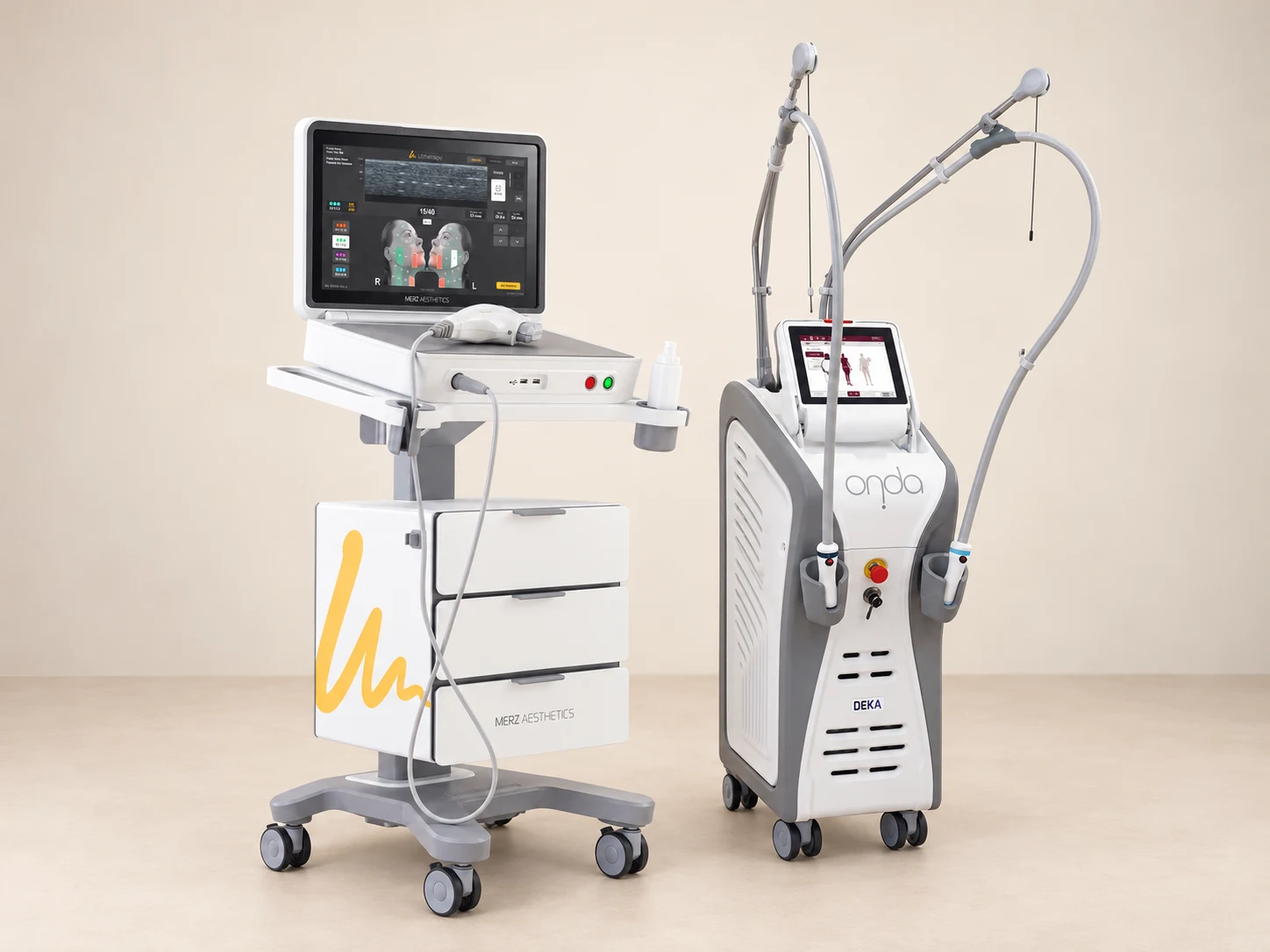
Focused ultrasound + Microwaves
Contour planning separates a lifting target from a local-fullness target. The allocation of both energies follows assessment of the volume to preserve.
How it works
Locate the sagging tissue
Ultherapy delivers focused ultrasound to tissue assessed with imaging, with depth and area chosen for the contour concern.
Assess fullness and skin
ONDA uses microwave energy. Handpiece choice and energy distribution depend on the tissue thickness and condition in an appropriate treatment area.
Map volume to preserve
Cheek hollows and asymmetry are reviewed before assigning energy. Uniform treatment across the whole face is not the starting assumption.
the qd standard
The same treatment, never the same plan.
Rather than a fashionable name or a fixed package, we weigh the structure found at examination, safety, recovery and the limits within one plan.
- DIAGNOSIS FIRST
Cause before name
We first separate out the tissue and the function behind your concern.
- LESS, PRECISE
Only as much as needed
Rather than an excessive change, we plan the smallest scope with a clear role.
- HONEST LIMIT
The limits, explained too
We explain the change you can expect, the alternatives, individual differences and the risks.
personal plan
From consultation to follow-up, planned as one flow.


Identify the source of fullness
A fuller under-chin area does not by itself establish a fat-reduction goal.
Protect existing volume
Hollow cheeks and thin areas are identified separately in the treatment plan.
Keep comparisons consistent
Head angle and body-weight changes can distort apparent contour improvement.
What the procedure is like
- Assess fullness, sagging and asymmetry with the head relaxed and in profile.
- Mark preserved volume and exclusions, then allocate ultrasound shots and ONDA kJ independently.
- Monitor contact and heat response during individually planned treatment in suitable areas.
- Record under-chin tenderness, swelling and side-to-side response before follow-up.
Please read this before treatment
- Temporary under-chin swelling can make the area look fuller initially; the immediate contour is not a final result.
- Follow aftercare instructions for tenderness or localized warmth instead of attempting strong massage.
Safety & considerations
Possible reactions
- Swelling, redness, tenderness and heat discomfort can occur. Burns, altered sensation and unwanted contour changes should also be discussed.
Discuss before treatment
- Report recent weight changes, liposuction, fat grafting, fillers, metal or electrical implants, pregnancy, breastfeeding and areas of reduced sensation.
Contact the clinic about worsening pain, blistering or persistent numbness before considering another contouring treatment.
what to expect
What to expect over time
A general guide to how the days and months after treatment usually unfold. Results vary by individual.
On the day
Check swelling, warmth and differences between the two sides.
As swelling changes
Distinguish temporary fullness from pain that persists or worsens.
Contour review
Account for weight and head position while checking that desired volume is preserved.
Sessions & results
A numerical reduction in facial size cannot be promised. Reassessment of remaining fullness and sagging determines whether either device is appropriate again.
how it compares
How it compares
Ultherapy + Thermage focuses on sagging and firmness, while Ultherapy + ONDA adds assessment of local fullness and volume preservation. A lean face does not automatically suit either combination.
| Ultherapy | ONDA | |
|---|---|---|
| Energy | Focused ultrasound | Microwaves |
before consultation
Before you decide, the questions people always ask
kJ measures energy, not time or shots. The two figures describe separate devices; treatment time depends on the areas and method of delivery. Visit length is estimated from the range the ONDA handpiece covers, the Ultherapy allocation and preparation. Increasing kJ is not, by itself, how a contour goal is set.
These zones require separate assessment. Preserved volume and exclusion areas are mapped first, and ONDA may be restricted or another approach recommended. Where fat is thin or the cheeks are already hollow, ONDA coverage can be reduced or left out altogether.
The total does not prescribe equal allocation. Differences in tissue thickness, sagging, asymmetry and treatment area can require a different distribution. Fullness, sagging and asymmetry are checked with the head relaxed and in profile, and the volume to preserve is marked before the kJ is allocated.
Fat, glands and skeletal structure are different. The cause of fullness must be assessed; a fat-focused plan cannot simply be applied to another structure. Depending on the findings, ONDA coverage may be reduced, or the plan may centre on Ultherapy if sagging is the main concern.
Explain recent weight changes and your intended weight-loss plan. Continuing changes in facial volume can affect timing, treatment boundaries and interpretation of results. Also mention any liposuction, fat grafting or fillers. When results are reviewed, differences in body weight and head angle are taken into account so that they do not distort the comparison.
Related treatments
 Lifting
Ultherapy PRIME
qd ultherapy primeThe target depth the focused ultrasound must reach, and how far the sagging goes into the SMAS Lifting
Sofwave
qd sofwaveLoss of elasticity in the mid dermis and the area to treat Lifting
Thermage FLX
qd thermage flxLoss of elasticity in the deep dermis, the area to treat and the number of shots Lifting
ONDA Lifting
qd onda liftingThe deep-layer fat and elasticity the microwaves reach, and the area to treat Lifting
Ultherapy + Thermage FLX
A separate plan for facial sagging and loss of skin firmness

personal consultation
Tell us what bothers you now, the change you want, what you have had done before and any dates that matter. We will compare the possible approaches and their limits, calmly.
Consult now