Fraxel Butterfly Zone
Fraxel Butterfly Zone is a focused fractional-laser option for texture around the nose and adjacent inner cheeks. Assessment distinguishes visible sebaceous structures from indented scars and checks red or inflamed patches before selecting the area.
Fraxel Butterfly Zone is available at QD Clinic in Gangnam, Seoul, Korea.


is this for me
Who it’s for
Even if none of these describes you, we will look again at the consultation.
- Uneven texture concentrated beside the nose
- Shallow depressions limited mainly to the inner cheeks
- A preference to discuss a smaller treatment area and its recovery
This option does not cover the entire face or eyelids. Deep narrow or tethered scars may need a different approach.
start with your concern
Before you pick a treatment name, start with the cause of your concern.
Even a treatment with the same name takes on a different role and scope depending on your current structure, the change you want, what you have had before and the recovery time you have.
Where you are now, and where we start
Map the border around the nose and inner cheeks before treating concentrated pore and shallow-scar concerns.
The change you want, the impression you keep
Set a local texture goal while assessing oil production separately from changes in indented scars.
How it differs from similar options
Potenza uses radiofrequency microneedling, while fractional laser uses light energy; a shared pore concern does not make the methods interchangeable.
Health information and recovery schedule
Mention exfoliating products and repeated irritation beside the nose when discussing when to begin.
the principle
How it works
Fraxel Butterfly Zone
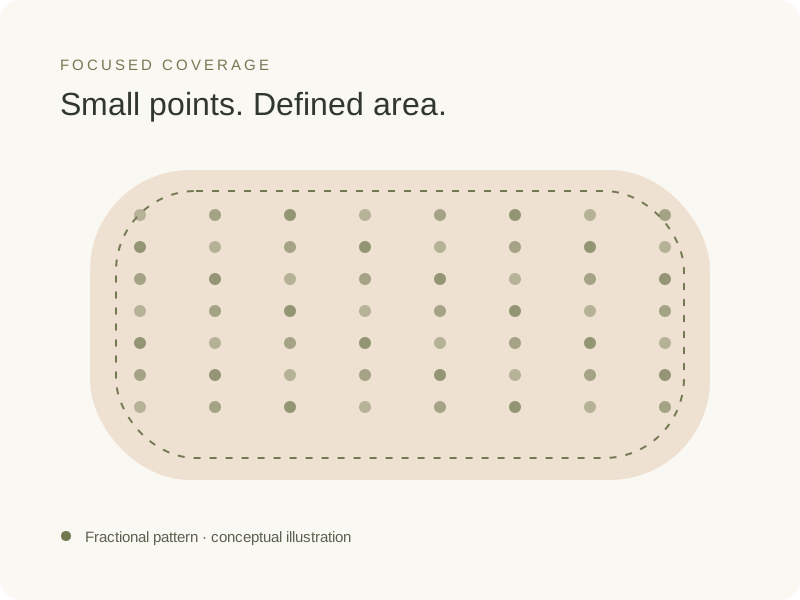
Fractional delivery creates separated microscopic treatment points within the selected area. The curve of the nose and the thickness of the inner cheeks guide coverage and density instead of one uniform setting across the region.
How it works
Identify the concern
Distinguish enlarged pores, sebaceous structures and indented scars.
Outline the zone
Agree which parts of the nose and inner cheeks are included.
Place treatment points
Distribute fractional laser stimulation according to skin response.
Review the edges
Observe how the treated area settles relative to neighbouring skin.
the qd standard
The same treatment, never the same plan.
Rather than a fashionable name or a fixed package, we weigh the structure found at examination, safety, recovery and the limits within one plan.
- DIAGNOSIS FIRST
Cause before name
We first separate out the tissue and the function behind your concern.
- LESS, PRECISE
Only as much as needed
Rather than an excessive change, we plan the smallest scope with a clear role.
- HONEST LIMIT
The limits, explained too
We explain the change you can expect, the alternatives, individual differences and the risks.
personal plan
From consultation to follow-up, planned as one flow.


Agree the outline
Use a mirror to confirm where this focused treatment will stop.
Observe the contours
Check the response around the curved nose separately from the flatter cheek.
Review local healing
Reassess the border as well as the texture at the next visit.
What the procedure is like
- Cleanse and review the difference between pores and scars, then agree the boundary.
- Prepare appropriate anaesthesia and eye protection before treating the selected area.
- Finish with the included cryo care and sheet mask, followed by local aftercare instructions.
The visit includes preparation and soothing care; its length depends on the agreed zone and the skin response.
Please read this before treatment
- Redness, swelling, warmth or a rough feel may be confined to the treated patches.
- Avoid rubbing the sides of the nose or picking flakes; follow the prescribed moisturising and sun-protection plan.
- Contact the clinic for blisters, discharge or increasing pain rather than waiting for the next session.
Safety & considerations
Possible reactions
- Temporary redness, swelling, stinging and dryness
- Pigment change, burns, infection or uncommon scarring
Discuss before treatment
- Dermatitis, wounds or inflamed acne beside the nose
- Recent peeling, retinoid or isotretinoin use, and previous pigmentation reactions
A small treatment area still needs recovery time and carries a risk of pigment changes. Active irritation must be assessed first.
what to expect
What to expect over time
A general guide to how the days and months after treatment usually unfold. Results vary by individual.
Immediately
Check the heat and redness within the butterfly zone.
During healing
Reduce friction while dryness and fine flaking settle beside the nose.
At reassessment
Compare pores and shallow depressions under consistent lighting after redness subsides.
Sessions & results
Pores do not permanently close and scars are not guaranteed to disappear in one visit. A three-session option still requires a recovery check before each appointment.
how it compares
How it compares
Localised concerns beside the nose can be assessed within a butterfly-zone plan. Texture extending onto the outer cheeks or forehead calls for a comparison with full-face coverage.
| Fraxel Butterfly Zone | Fraxel Full Face | |
|---|---|---|
| Coverage | Nose and adjacent inner cheeks | Several facial regions assessed individually |
before consultation
Before you decide, the questions people always ask
It centres on the inner cheeks beside the nose. If scarring extends farther out, the coverage is compared with the full-face option, although a wider area is not always the better choice. Before treatment, the clinician confirms with you in a mirror where the butterfly zone will stop.
Some visible dots are sebaceous structures or comedones. Surface congestion and depressed scars require different assessment; laser treatment does not remove every dark dot. Oil production and changes in indented scars are therefore reviewed separately, both before and after treatment.
During healing, redness or dryness may be limited to the treated area. Avoid rubbing the sides of the nose, scrubbing or picking flakes, and follow the moisturising and sun-protection plan. Persistent contrast or darkening should be reviewed by the clinic, and the border is checked again at the next visit.
It means three separate treatment visits, not three overlapping rounds on one day. The skin must be reassessed before the next appointment. Completing three sessions does not guarantee a result, so pores and shallow depressions are compared under consistent lighting each time.
Persistent peeling or redness may indicate dermatitis or an impaired barrier. That patch may be excluded or treatment deferred until the skin is stable. Mention exfoliating products, retinoid use or a habit of touching the nose, as these help decide when to begin.
Related treatments



personal consultation
Tell us what bothers you now, the change you want, what you have had done before and any dates that matter. We will compare the possible approaches and their limits, calmly.
Consult now