
qd story
Ultherapy 300 vs 600 Shots: What Matters More Than the Number of Shots?
Published: 2026-10-12
Ultherapy 300 vs 600 Shots: Do More Shots Really Mean Better Lifting?
When you start researching Ultherapy, there's one set of numbers you'll notice almost immediately.
300 shots and 600 shots.
It's the same Ultherapy device either way, yet the price changes with the number of shots, so many people find themselves unsure which option to choose.
International patients planning Ultherapy lifting in Korea in particular often search for things like Ultherapy 300 vs 600 shots and How many Ultherapy shots do I need?
So does 600 shots deliver twice the result of 300?
Not necessarily.
That's because Ultherapy isn't simply about delivering as much ultrasound as possible. It's a treatment that plans exactly where beneath the skin energy goes, and how much of it.
In this article, we'll walk through the difference between 300 and 600 shots, how the shot count is decided, what to consider for different areas of the face, and what to expect in terms of results and how long they last.
1. What Does “One Shot” Actually Mean in Ultherapy?
Before comparing shot counts, it helps to understand what a single shot actually is.
Ultherapy uses micro-focused ultrasound with visualization (MFU-V) to deliver thermal energy to specific depths beneath the skin.
What's commonly called one shot refers to a single ultrasound treatment line.
Each line can create a number of tiny thermal coagulation points. So “300 shots” doesn't mean that 300 coagulation points are created in the skin.
Even with the same number of shots, the way energy is actually delivered can differ depending on the transducer used, the energy settings and the treatment area.
For example, 300 shots focused under the chin and 300 shots divided between the cheeks and jawline are the same number, but the treatment goal and energy distribution are different.
That's why, when comparing Ultherapy options, it's important to look not only at the shot count but also at which areas are treated and how.
2. The Real Difference Between 300 and 600 Shots
Comparison | Ultherapy 300 shots | Ultherapy 600 shots |
|---|---|---|
Number of treatment lines | 300 lines | 600 lines |
Treatment plan | Can focus on a limited area | Can be spread over a wider area |
Areas treated | Specific areas such as the jawline or under the chin | Multiple areas such as the cheeks, jawline and under the chin |
Energy distribution | Relatively fewer lines in total | Relatively more lines in total |
Treatment time | May be relatively shorter | May be relatively longer |
Skin assessment | Essential | Essential |
Expected results | Depend on an appropriate plan | Depend on an appropriate plan |
How long results last | Varies from person to person | Cannot be assumed to last longer |
Cost | Generally lower | Generally higher |
The difference is that 600 shots allows twice as many treatment lines as 300 shots.
In practice, though, what matters is how those lines are used.
If you're only concerned about part of your face, for example, there may be no need to deliver energy over a wide area.
On the other hand, if you're seeing loss of firmness in several areas at once, a plan using more treatment lines may be needed.
In other words, the difference between 300 and 600 shots is best understood not as a difference in intensity, but as a difference in treatment coverage and how energy is distributed.
3. Small Face, 300 Shots; Larger Face, 600 Shots?
Some people decide on the number of Ultherapy shots based on face size alone.
But face size and the appropriate number of shots don't always go hand in hand.
Two faces of the same size can differ in skin thickness, amount of subcutaneous fat, degree of laxity and the structure of the tissue under the chin.
A relatively small face, for example, may still show loss of firmness across the cheeks, jawline and under the chin.
Conversely, a larger face may only have a few areas that actually need lifting.
So choosing 300 shots simply because your face is small, or 600 shots simply because it's larger, isn't the right approach.
Before treatment, the following factors should be assessed together:
Skin thickness and firmness
How much the cheeks and jawline have sagged
The amount and distribution of facial fat
Thickness of the tissue under the chin
Which areas need ultrasound treatment
The degree of change you're hoping for
Only after reviewing these factors should the treatment area and the appropriate number of lines be decided.
4. Should People With Thin Cheeks Avoid 600 Shots of Ultherapy?
If you have little fat in your cheeks, a more careful assessment may be needed before Ultherapy.
Because Ultherapy concentrates ultrasound energy at specific depths, the characteristics of the tissue need to be fully taken into account in areas where the skin and subcutaneous fat are thin.
In particular, if the area below the cheekbones is already hollow or there's little fat in the face overall, lifting alone may not achieve the look you want.
That doesn't mean people with thin cheeks must always avoid 600 shots.
What matters more than the total shot count is deciding which areas will receive energy, and which areas should be avoided or approached with caution.
Someone concerned about lost volume in the mid-cheek and someone concerned about sagging under the chin, for example, need different approaches even with the same Ultherapy treatment.
So if you have relatively little facial fat, it's a good idea to talk through your facial volume and the tissue changes to expect with your doctor before treatment.
5. Is Concentrated 300-Shot Ultherapy More Effective Than 600 Shots?
Even with the same 300 shots, energy distribution differs depending on whether the shots are spread over a wide area or concentrated in one place.
But concentrating many shots in one area doesn't automatically produce better results.
With ultrasound lifting, the spacing and depth of treatment need to be set according to the thickness and anatomy of the tissue.
Delivering too much energy to a small area can increase the risk of unnecessary tissue irritation or side effects.
On the other hand, if not enough energy reaches the areas that need treatment, the change you hope for may be limited.
So the key to Ultherapy isn't simply piling up shots. It's distributing the right amount of energy to the tissue that needs it, according to a plan.
Whether 300 or 600 shots is more suitable should be decided based on the actual treatment area and your skin condition.
6. Do 600 Shots of Ultherapy Last Longer Than 300?
Many people assume that choosing 600 shots will make the lifting effect last longer.
But doubling the number of shots doesn't double how long the results last.
Ultherapy is a treatment in which changes may appear gradually, through the tissue's response to ultrasound energy and the collagen remodeling that follows.
Changes generally develop over several weeks after treatment, and results are often assessed at around two to three months.
How long the results last can vary with how much your skin has aged, the treatment area, how your tissue responds and your lifestyle.
Some people may notice changes for a year or longer, but the same duration isn't guaranteed for everyone.
There isn't sufficient evidence that 600 shots will always last longer than 300 shots.
So when thinking about longevity, it's better to look at your skin condition and treatment plan together rather than judging by shot count alone.
7. Is There a Difference in Pain Between 300 and 600 Shots?
During Ultherapy, ultrasound energy is focused at specific depths in the skin, which can cause a prickling or dull, aching sensation.
Because 600 shots involves more passes than 300, the treatment area may be larger or the session may take longer.
However, doubling the shots doesn't double the intensity of the pain.
Pain is influenced by factors such as:
The area of the face being treated
The ultrasound depth used
Energy settings
Your individual pain sensitivity
The thickness of the skin and subcutaneous fat
How pain is managed during treatment
So it's hard to say that 300 shots is always comfortable and 600 shots is always painful.
If you're worried about pain, it's a good idea to discuss anesthesia options and a pain management plan with your doctor before treatment.
8. What International Patients Should Check Before Ultherapy in Korea
Korea is one of the destinations that draws interest from international patients looking for aesthetic skin treatments.
If you're searching for Ultherapy in Gangnam, Seoul, phrases like Ultherapy in Korea, Ultherapy Gangnam, Ultherapy 300 shots price and Ultherapy full face can be helpful.
As an international patient, it's important to look beyond price and shot count and check what the treatment actually involves.
First, confirm which areas the shot count quoted during your consultation will cover.
A number like 300 or 600 shots alone doesn't tell you exactly what the treatment will cover.
Second, check that a genuine device and genuine transducers are used.
Third, make sure a doctor personally assesses your skin and plans your treatment.
Fourth, ask about the information and aftercare provided for possible post-treatment effects such as swelling, tenderness, bruising and changes in sensation.
If you're visiting Korea on a short trip, you should also factor in your return flight and whether there's time to check on your progress after treatment.
9. Frequently Asked Questions About Ultherapy 300 vs 600 Shots
Q1. Is 300 shots of Ultherapy enough?
Whether 300 shots is enough depends on the treatment area and your individual skin condition.
If the plan is a limited treatment of a specific area, 300 shots may be appropriate, but treating several areas together may call for a different plan.
Q2. Is 600 shots of Ultherapy better than 300?
600 shots allows more treatment lines, but that doesn't necessarily mean a better result.
What matters is the right treatment coverage and energy distribution.
Q3. How many Ultherapy shots do I need for a full face?
The number of shots needed for a full face isn't the same for everyone.
The number of treatment lines required depends on how the treatment area is defined, skin thickness, the degree of sagging and the choice of transducer.
So it's difficult to go by a rule such as “full-face Ultherapy always means 600 shots.”
Q4. Does Ultherapy reduce facial fat?
Ultherapy is primarily a non-invasive lifting device, and its purpose differs from that of typical fat-removal treatments.
However, because the possibility of unintended tissue changes from ultrasound energy needs to be considered, careful treatment planning is required if you have little facial fat or are concerned about hollow cheeks.
Q5. How long do Ultherapy results last?
How long Ultherapy results last varies from person to person.
Some people may see changes last a year or longer, but longevity can't be predicted from shot count alone.
10. Conclusion: Ultherapy Results Start With the Treatment Plan, Not the Number
On the surface, 300 and 600 shots of Ultherapy simply mean fewer shots versus more shots, but there are many more factors to consider in actual treatment.
300 shots may be considered when planning a focused treatment of a limited area, while 600 shots may be used when planning broader treatment across several areas.
Neither, however, is a fixed standard that applies to everyone.
The right treatment plan depends on face size, skin thickness, fat distribution, degree of sagging and your treatment goals.
In the end, the important question isn't “Which is better, 300 or 600 shots?”
“Which areas of my skin need ultrasound energy, at what depth, and how much?”
Answering this question is the starting point for choosing the Ultherapy treatment that's right for you.
If you're considering Ultherapy, it's important to have your skin condition and facial structure properly assessed and to discuss a treatment plan suited to you, before comparing shot counts or prices.
Ultherapy 300 vs 600 Shots at a Glance
Ultherapy is a non-invasive lifting treatment that delivers ultrasound energy to specific depths in the skin to stimulate collagen remodeling.
The main difference between 300 and 600 shots is the total number of ultrasound passes and the treatment coverage they allow. That said, 600 shots doesn't automatically deliver twice the lifting effect of 300 shots.
Comparison | Ultherapy 300 shots | Ultherapy 600 shots |
|---|---|---|
Number of passes | 300 | 600 |
Treatment coverage | Focused on a specific or limited area | Can be planned broadly across several areas |
Main purpose | Improving firmness and sagging in a localized area | Improving firmness and sagging across several areas |
May suit | Those concerned about sagging in a specific area | Those concerned about sagging in several areas |
Example treatment areas | Jawline, under the chin, etc. | Cheeks, jawline, under the chin, etc. |
Treatment time | Relatively shorter | Relatively longer |
Pain | Varies with treatment area and settings | Discomfort may increase with a larger treatment area |
Results | Vary with individual skin condition and treatment plan | Vary with individual skin condition and treatment plan |
How long results last | Varies from person to person | Shot count alone doesn't guarantee longer-lasting results |
Cost | Generally relatively lower | Generally relatively higher |
When Might 300 or 600 Shots Be Considered?
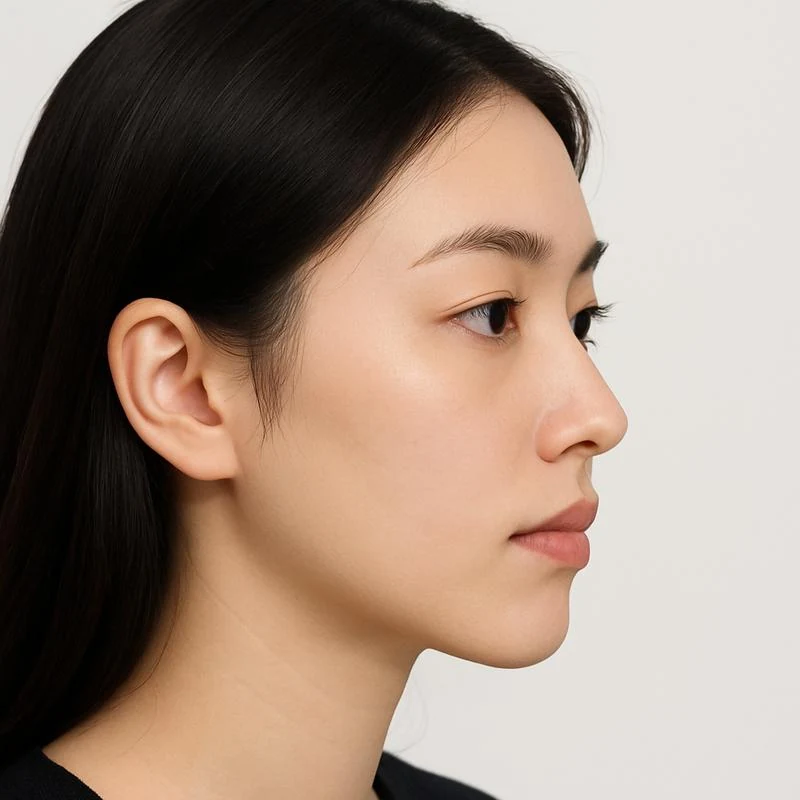
Ultherapy 300 shots
May be considered if you're concerned about loss of firmness in a specific area such as the jawline or under the chin, or if you're planning lifting over a relatively limited area. This doesn't mean, however, that 300 shots is a standard dose that's always right for a particular area.

Ultherapy 600 shots
May be chosen when several areas such as the cheeks, jawline and under the chin are being treated together, or when a wider treatment area is planned. That said, 600 shots isn't always necessary or appropriate for the full face.
4 Things That Matter More Than Shot Count
Skin thickness and fat distribution: If you have little facial fat or thin skin, the treatment areas and depths need to be decided with extra care.
Ultrasound depth: Transducers of 1.5 mm, 3.0 mm and 4.5 mm are commonly used, with the appropriate depth chosen according to your skin structure.
Energy distribution and treatment design: Even with the same 300 shots, the treatment plan changes depending on where and how the shots are distributed.
Your doctor's judgment: Checking the tissue with real-time ultrasound imaging and tailoring the treatment to your individual skin condition is essential.