
qd story
ONDA Lifting (Coolwaves) FAQ: Sessions, Pain, Hollow Cheeks
Published: 2026-07-08
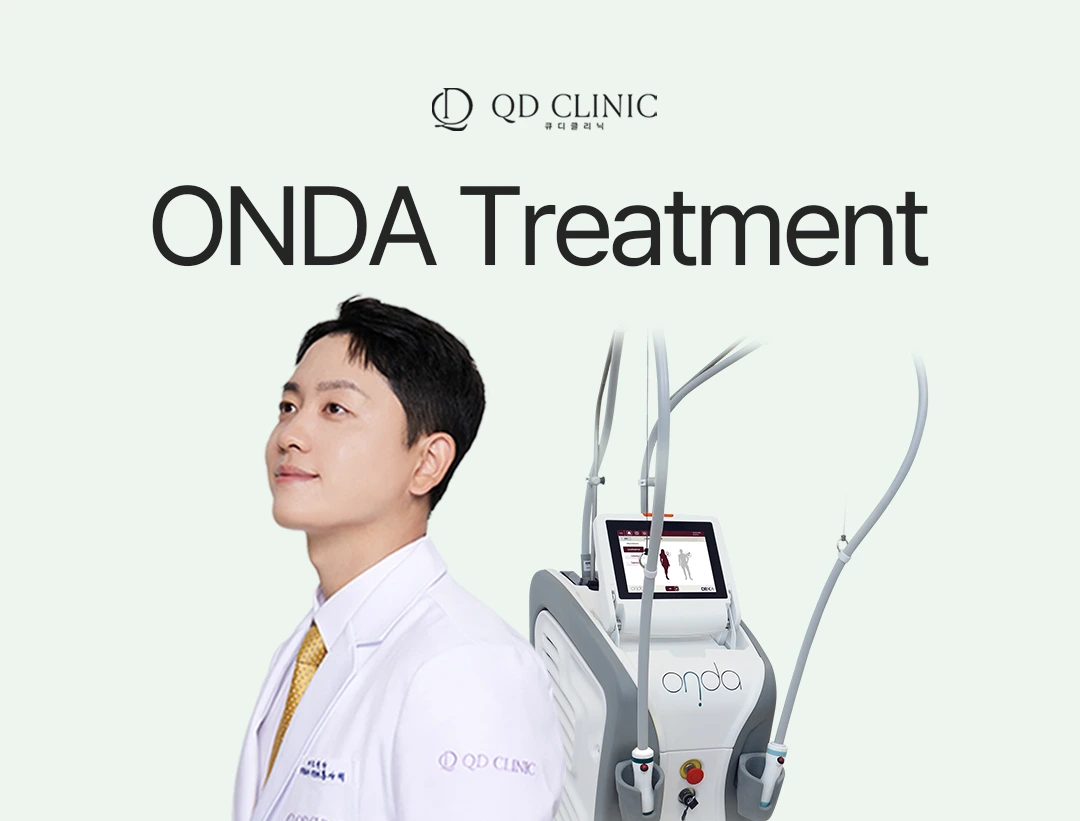
ONDA lifting is a non-surgical treatment performed with ONDA, a 2.45GHz microwave device made by the Italian company DEKA. The manufacturer calls this microwave technology Coolwaves and explains that the energy is delivered mainly to the subcutaneous fat layer while stimulating contraction and renewal of collagen in the dermis. This is why it comes up when people are concerned about both skin firmness and localized fat. Changes appear gradually over several sessions. Below are the questions we hear most often in consultation, answered with sources.
At a glance
ONDA is DEKA's 2.45GHz microwave (Coolwaves) device. "ONDA lifting", "ONDA" and "Coolwaves lifting" are different names for the same treatment.
The recommendations of the ONDA International Advisory Board give 30–60 minutes per area and 4 sessions at 4-week intervals as the general protocol.
The depth at which heat concentrates differs by handpiece (Shallow about 0.7cm, Deep about 1.2cm).
Common reactions are redness, warmth, tenderness and swelling; nodules, burns and contour irregularities have been reported rarely.
It is not a weight-loss treatment; when subcutaneous fat is thin or sagging is severe, other methods are considered first.
What is ONDA Coolwaves and how does it work?
ONDA is an energy-based device that delivers 2.45GHz microwaves beneath the skin. DEKA states that it is designed so the energy reaches only "where it is needed (subcutaneous adipose tissue)" while preserving the surrounding tissue, and explains that the collagen fibers of the dermis contract immediately and new collagen production is stimulated, making the tissue firmer.
The 2024 recommendations of the international advisory board (Hoffmann et al., Bioengineering) describe two mechanisms. One is the rupture of fat cell membranes by heat; the other is the immediate contraction of collagen caused by heat in the dermis, followed by the formation of new collagen. According to the same recommendations, the handpiece has built-in contact cooling (up to 5°C) that protects the surface layer of the skin from overheating.
Compared with ultrasound lifting (Ultherapy PRIME) or radiofrequency lifting (Thermage FLX), the type of energy is different. Ultrasound concentrates heat in points at a set depth, and radiofrequency heats the dermis broadly, while ONDA uses microwaves designed to build up heat mainly in the fat layer. Rather than one being better than another, they target different tissues.
Can I see a lifting effect right after the treatment?
Some people feel slightly firmer right afterwards, but changes worth judging appear over several weeks to several months. The manufacturer mentions immediate contraction of dermal collagen, but it takes time for fat cells to be cleared and for new collagen to settle in.
Studies assessed results at time points from 4 weeks to 6 months after the last session. In a pilot study (12 people) summarized in the advisory board recommendations, abdominal circumference decreased by a median of 3.90cm 4 weeks after the last session. So that swelling right after treatment is not mistaken for a result, we usually review progress again at around 2–3 months.
How many sessions, and at what intervals?
The ONDA International Advisory Board recommendations give 4 sessions at 4-week intervals as the general protocol. Studies differ, too. A study of the area under the chin (48 people) used 6 sessions at 2-week intervals, and a body study from Colombia (35 people) performed 3 or more sessions at intervals of 20–45 days.
In the end, the number of sessions depends on the area, fat thickness, skin elasticity and your goals. Rather than drawing conclusions from a single session, it is more realistic to have several sessions, review progress and then adjust the plan. The "tens of thousands of joules" often quoted in Korea refers to the total energy delivered during treatment (kJ); a larger number does not mean a correspondingly larger result.
How long do the results last?
How long the results last depends on age, skin condition, weight changes and lifestyle, so the timing of the next session is decided by following your progress after treatment. Studies have generally followed patients for several weeks to several months after the last session.
Also, even if some fat cells are reduced, the remaining fat cells can grow again if you gain weight, and skin aging continues after treatment. That is why it helps to keep your weight stable after treatment and to decide the timing of further sessions according to how things progress.
Can my cheeks look hollow after ONDA lifting?
If fat-reducing energy is applied where there is little fat to begin with, the area can look more hollow. Since ONDA is a device that concentrates heat in the fat layer, this is something that naturally has to be considered.
For localized fat treatment, the advisory board recommendations exclude tissue with subcutaneous fat thinner than 1cm, and with the standard Deep and Shallow handpieces they exclude the face and neck except the area under the chin. For facial lifting and the area under the chin, DEKA offers a separate Pocket handpiece on the Onda PRO. If the front or side of your cheeks is already hollow, we avoid that area or change the settings, and plan so that fat reduction is limited to the area under the chin, where fat has actually accumulated.
Can sagging jowls improve?
If jowls look heavy because of fat, it can help, but if sagging tissue is the main cause, ONDA alone has limits. Jowls are often created by a combination of reduced skin elasticity, sagging of the cheek soft tissue and changes in fat distribution.
The advisory board recommendations classify "particularly lax tissue" as a relative contraindication. If the sagging is clear and the tissue needs to be lifted, it is appropriate to compare options such as ultrasound lifting or, in more advanced cases, surgical methods like a mini facelift.
Can I have ONDA together with Ultherapy PRIME?
Because the two devices use different energy and target different tissues, they are sometimes included in the same plan. Ultherapy PRIME uses focused ultrasound to concentrate heat at a set depth (according to FDA clearance documents, visualized up to 8mm with DeepSEE imaging) to treat sagging tissue, while ONDA heats the fat layer and dermis.
Because heat is applied to the same area in succession, the order and interval are set according to how your skin reacts. Whether you have one treatment or both is decided by which concern is greater: sagging or fat.
Does it hurt? What is the procedure like?
Most people feel deep warmth and pressure, and the intensity varies by person and area. Cooling reduces surface heat but does not remove the sensation of heat itself. In the Colombian study, a mild burning sensation lasting about 2 minutes after the procedure ended was reported.
Consultation, assessment of skin and fat thickness, and marking of the treatment area
Cleansing, then microwave delivery with the cooled handpiece (about 30–60 minutes per facial session)
Soothing care and aftercare instructions
If one spot feels unusually hot, please tell us right away. The recommendations warn that inadequate cooling creates a risk of burns.
Can I wear makeup on the day? What are the side effects?
Because there are no incisions or needles, most people return to daily life the same day, and if the skin has no wounds you can wash your face and wear makeup as instructed. However, if redness or swelling remains, it is better to wait until it settles.
The reactions summarized in the advisory board recommendations are as follows.
Common, usually temporary reactions: redness, warmth, tenderness, swelling, itching, numbness, firmness
Nodules: may form under the skin; reported to resolve within 78 days on average
Burns: may occur with insufficient cooling; excessive pressure or settings that are too high increase the risk of side effects
Risks with improper use: skin and fat necrosis, contour irregularities, asymmetry
If pain gets steadily worse, or blisters or spreading redness appear, please contact us right away. On the day of treatment, it is best to avoid saunas, hot baths and strenuous exercise.
Who should not have it?
The contraindications and cautions in the advisory board recommendations are as follows.
Contraindications: heart failure, cardiac implants or pacemakers, pregnancy and breastfeeding up to 10 months after delivery, minors, unrealistic expectations
Relative contraindications: varicose veins (body), controlled diabetes, fibrotic tissue or particularly lax tissue
Excluded from treatment: subcutaneous fat under 1cm for localized fat treatment, obesity
If you have any other implanted electrical device or a metal implant in the treatment area, have recently had fillers or thread treatments, or tend to form keloids, please tell the medical team before treatment. If any of these applies, whether and where to treat is decided separately.
Can body ONDA firm up the upper arms?
Body ONDA is used on areas where fat gathers and skin is loose, such as the upper arms, thighs, abdomen and flanks. DEKA presents ONDA's applications as localized fat, cellulite and skin laxity, and recommends the Deep handpiece for localized fat and the Shallow handpiece for cellulite and skin tightening.
In a Colombian study of 35 people, skinfold thickness decreased at every measured site after 3 or more sessions; nutritional counselling was also provided in that study. If skin laxity rather than fat is the main issue on the upper arms, ultrasound lifting, which targets skin firmness, is also compared.
At QD Clinic
QD Clinic offers both facial ONDA lifting and body ONDA. Before treatment, we assess fat thickness and skin sagging separately in the cheeks, under the chin and along the jawline, and first mark where fat can be reduced and where volume should be preserved. If sagging is the main problem, we also explain how this differs from ultrasound or radiofrequency lifting and surgical options. We do not fix the number of sessions from the start; we decide again after several sessions based on progress.
Frequently asked questions
Can people in their 20s have it?
We look at the cause rather than age. Minors are a contraindication in the recommendations, and even for adults, ONDA's strength of concentrating heat in the fat layer only comes into play when there is an area where fat has actually accumulated, such as under the chin. If your face has little fat, other methods are considered first.
Do I need to exercise or diet as well?
It is best to keep your weight from rising significantly during the treatment period. Even if some fat cells are reduced, the remaining fat cells can grow again. ONDA is not a weight-loss treatment.
Can I come with moisturizer or skincare products on?
Because microwaves are strongly absorbed by water, the advisory board recommendations advise stopping moisturizers about one day before treatment. On the day, please come with the treatment area clean.
Can it cause bruising?
Small bruises can occur rarely and usually fade within a few days. If you take blood-thinning medication, please let us know in advance.
I recently had filler or a thread lift. Is that a problem?
If you have recently had fillers or threads in the same area, please let us know before treatment. The treatment area and schedule are set according to the product used and when it was placed.
References
DEKA, Onda product page — www.dekalaser.com
DEKA, Onda PRO product page — dekalaser.com
Hoffmann K et al. Microwave-Energy-Based Device for the Treatment of Cellulite and Localized Adiposity: Recommendations of the Onda Coolwaves International Advisory Board. Bioengineering, 2024 — pmc.ncbi.nlm.nih.gov
Ruiz-Rosas AI et al. Study of a 2.45 GHz microwave body remodeling system. Journal of Nutrition and Metabolism, 2023 — pmc.ncbi.nlm.nih.gov
US FDA 510(k) K243035, Ulthera System clearance summary (2025) — www.accessdata.fda.gov